
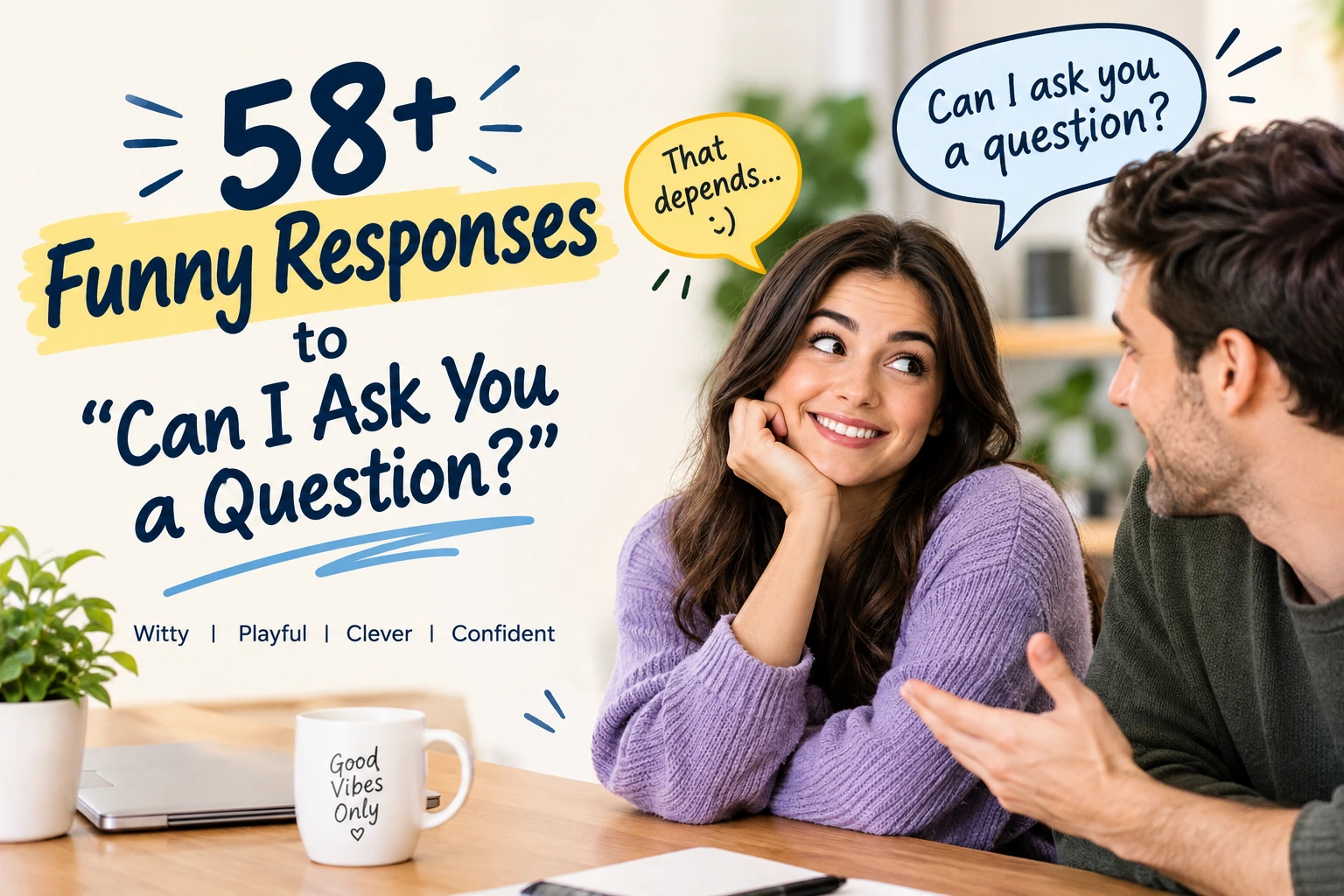
Sometimes, “Can I ask you a question?” sounds completely innocent. Other times, those six words feel like the beginning of a confession, an awkward conversation, or something you absolutely did not prepare for. Whether a friend sends it at midnight, a coworker says it with a suspiciously serious expression, or your crush drops it into a text, the perfect funny response can instantly change the mood. Knowing creative funny responses to can I ask you a question helps you avoid predictable replies and keeps conversations lively. A clever response can show confidence, humor, personality, and even a little playful sarcasm. Instead of simply saying “Sure,” you can respond with something unexpected that makes the other person laugh while inviting them to continue. Here are more than 58 entertaining, witty, and versatile responses for almost every situation.
What Does “Can I Ask You a Question?” Mean?
“Can I ask you a question?” is a common phrase used to get someone’s attention before asking something. It can be completely casual, but depending on the situation, it may also create suspense or make the listener nervous.
For example, when a friend says, “Can I ask you a question?” you might immediately wonder what they are about to say. In texting, the phrase can feel even more dramatic because there is no facial expression or body language to provide context.
The emotional tone can range from innocent and curious to serious, teasing, romantic, suspicious, or humorous. That makes it an excellent opportunity for a funny response.
When to Use Funny Responses to “Can I Ask You a Question?”
Funny responses work best when the relationship and situation allow for humor. They can make ordinary conversations more memorable and help you show personality without overthinking your reply.
Casual Conversations
With friends, siblings, classmates, or people you know well, playful answers are usually appropriate.
Example: “You can ask, but I reserve the right to dramatically overreact.”
Text Messages
Texting is one of the best places for witty responses because humor can keep a conversation from becoming unnecessarily serious.
Example: “Depends. Is my lawyer required?”
Workplace Conversations
With coworkers you know well, light humor can work, but avoid jokes that could sound disrespectful or unprofessional.
Example: “Sure, but please submit your question in triplicate.”
Dating and Flirting
A playful answer can add suspense and create a fun conversational rhythm.
Example: “You can, but now I’m suspicious.”
Speeches and Social Situations
In informal presentations or group discussions, humorous responses can help break the ice.
Example: “Of course. I have approximately three minutes of wisdom available.”
Is “Can I Ask You a Question?” Polite or Professional?
Yes. “Can I ask you a question?” is generally polite and completely acceptable in professional communication. It gives the other person a moment to prepare before introducing a topic.
However, funny responses are highly dependent on context. A playful answer may be perfect when chatting with a close coworker but inappropriate when speaking with a manager, client, professor, interviewer, or someone you do not know well.
In formal situations, choose humor carefully and keep it subtle. In casual conversations, you have much more freedom to be sarcastic, dramatic, mysterious, or silly.
1. “You already did.”
Meaning: You point out that asking permission was technically the question.
Tone: Clever and playful.
Example Sentence: “Can I ask you a question?” “You already did.”
Short Explanation: This is one of the simplest witty responses because it turns their own wording into the punchline.
Purpose and Personalization: Perfect for friends, siblings, and playful texting.
2. “That depends. Is it a dangerous question?”
Meaning: You jokingly suggest their question could cause trouble.
Tone: Playful and teasing.
Example Sentence: “Can I ask you a question?” “That depends. Is it a dangerous question?”
Short Explanation: Use this when you want to create suspense before answering.
3. “Only if you promise not to judge my answer.”
Meaning: You jokingly prepare yourself for an awkward question.
Tone: Friendly and humorous.
Example Sentence: “Can I ask you a question?” “Only if you promise not to judge my answer.”
Short Explanation: It works especially well when you suspect the upcoming question might be personal.
4. “You may proceed, counselor.”
Meaning: You humorously pretend the person is questioning you in court.
Tone: Dramatic and witty.
Example Sentence: “Can I ask you a question?” “You may proceed, counselor.”
Short Explanation: Great for friends who enjoy exaggerated humor.
5. “Is this question covered by my warranty?”
Meaning: You jokingly treat the conversation like a product warranty.
Tone: Sarcastic and creative.
Example Sentence: “Can I ask you a question?” “Is this question covered by my warranty?”
Short Explanation: This unexpected comparison makes an ordinary interaction more entertaining.
6. “I suppose I can survive one question.”
Meaning: You pretend that answering a question is a major challenge.
Tone: Dry and playful.
Example Sentence: “Can I ask you a question?” “I suppose I can survive one question.”
Short Explanation: Ideal for someone who appreciates understated sarcasm.
7. “Make it quick. My attention span has left the building.”
Meaning: You jokingly claim that you cannot concentrate for long.
Tone: Casual and funny.
Example Sentence: “Can I ask you a question?” “Make it quick. My attention span has left the building.”
Short Explanation: Best for informal conversations and humorous texting.
8. “I was afraid you were going to ask that.”
Meaning: You pretend that you already know what they are about to ask.
Tone: Dramatic and mysterious.
Example Sentence: “Can I ask you a question?” “I was afraid you were going to ask that.”
Short Explanation: The humor comes from acting suspiciously serious.
9. “Are we asking questions or starting an interrogation?”
Meaning: You exaggerate the seriousness of the situation.
Tone: Sarcastic and confident.
Example Sentence: “Can I ask you a question?” “Are we asking questions or starting an interrogation?”
Short Explanation: Use this when someone has a habit of asking many questions.
10. “Sure, but I charge by the answer.”
Meaning: You jokingly pretend that your answers come with a fee.
Tone: Witty and humorous.
Example Sentence: “Can I ask you a question?” “Sure, but I charge by the answer.”
Short Explanation: A fun response when you want to tease someone without being rude.
11. “Depends on how embarrassing it is.”
Meaning: You suggest that you may reconsider depending on the question.
Tone: Playful and teasing.
Example Sentence: “Can I ask you a question?” “Depends on how embarrassing it is.”
Short Explanation: Particularly effective when talking about personal topics.
12. “Let me consult my imaginary lawyer.”
Meaning: You humorously pretend that you need legal advice before answering.
Tone: Absurd and playful.
Example Sentence: “Can I ask you a question?” “Let me consult my imaginary lawyer first.”
Short Explanation: This works because the exaggerated seriousness is obviously ridiculous.
13. “Absolutely. I love making questionable decisions.”
Meaning: You jokingly imply that agreeing to the question may be a bad decision.
Tone: Sarcastic and self aware.
Example Sentence: “Can I ask you a question?” “Absolutely. I love making questionable decisions.”
Short Explanation: Great for friends and humorous online conversations.
14. “Is this a trap?”
Meaning: You jokingly suggest the question may have hidden consequences.
Tone: Suspicious and playful.
Example Sentence: “Can I ask you a question?” “Is this a trap?”
Short Explanation: Short, natural, and perfect for texting.
15. “You may ask, but I may not answer.”
Meaning: You give permission while keeping control over your response.
Tone: Confident and teasing.
Example Sentence: “Can I ask you a question?” “You may ask, but I may not answer.”
Short Explanation: This creates playful mystery without being overly dramatic.
16. “Ask wisely.”
Meaning: You jokingly warn them to choose their question carefully.
Tone: Mysterious and confident.
Example Sentence: “Can I ask you a question?” “Ask wisely.”
Short Explanation: A short response that gives the conversation a dramatic edge.
17. “I accept questions on weekdays only.”
Meaning: You pretend that answering questions follows business hours.
Tone: Dry and humorous.
Example Sentence: “Can I ask you a question?” “I accept questions on weekdays only.”
Short Explanation: Particularly funny in casual workplace conversations.
18. “Question approved. Proceed.”
Meaning: You jokingly act like an authority granting permission.
Tone: Playful and commanding.
Example Sentence: “Can I ask you a question?” “Question approved. Proceed.”
Short Explanation: A concise response for playful conversations.
19. “I have a feeling I’m not going to like this.”
Meaning: You pretend to anticipate bad news.
Tone: Dramatic and teasing.
Example Sentence: “Can I ask you a question?” “I have a feeling I’m not going to like this.”
Short Explanation: Perfect when someone has already made you suspicious.
20. “Ask away, mysterious stranger.”
Meaning: You humorously make the person sound mysterious.
Tone: Lighthearted and theatrical.
Example Sentence: “Can I ask you a question?” “Ask away, mysterious stranger.”
Short Explanation: Best suited to casual texting and playful friendships.
21. “You can, but now I’m nervous.”
Meaning: You jokingly admit that the introduction made you anxious.
Tone: Relatable and funny.
Example Sentence: “Can I ask you a question?” “You can, but now I’m nervous.”
Short Explanation: Great when someone makes a simple question sound extremely serious.
22. “I’m listening, but my anxiety is also listening.”
Meaning: You humorously acknowledge that the suspense is making you nervous.
Tone: Relatable and casual.
Example Sentence: “Can I ask you a question?” “I’m listening, but my anxiety is also listening.”
Short Explanation: Works particularly well in friendly text conversations.
23. “Proceed with caution.”
Meaning: You jokingly warn them that the question may have consequences.
Tone: Dramatic and playful.
Example Sentence: “Can I ask you a question?” “Proceed with caution.”
Short Explanation: A short answer that immediately adds suspense.
24. “I would prefer a written statement.”
Meaning: You jokingly avoid answering verbally.
Tone: Sarcastic and clever.
Example Sentence: “Can I ask you a question?” “I would prefer a written statement.”
Short Explanation: This is especially funny when used with friends who enjoy formal humor.
25. “Let me emotionally prepare myself.”
Meaning: You pretend the question requires serious preparation.
Tone: Dramatic and humorous.
Example Sentence: “Can I ask you a question?” “Give me a second to emotionally prepare myself.”
Short Explanation: Useful when the other person has a reputation for asking unexpected questions.
26. “Depends. Do I get a lifeline?”
Meaning: You compare answering the question to competing on a quiz show.
Tone: Playful and clever.
Example Sentence: “Can I ask you a question?” “Depends. Do I get a lifeline?”
Short Explanation: A creative choice for friends and game loving personalities.
27. “Only if there are snacks involved.”
Meaning: You jokingly demand a reward for answering.
Tone: Friendly and silly.
Example Sentence: “Can I ask you a question?” “Only if there are snacks involved.”
Short Explanation: A harmless response that instantly makes the interaction more relaxed.
28. “My final answer is yes.”
Meaning: You pretend that you are already participating in a game show.
Tone: Playful and theatrical.
Example Sentence: “Can I ask you a question?” “My final answer is yes.”
Short Explanation: Great for people who enjoy references to quizzes and competitions.
29. “This feels suspiciously official.”
Meaning: You humorously suggest that their question sounds serious.
Tone: Dry and witty.
Example Sentence: “Can I ask you a question?” “This feels suspiciously official.”
Short Explanation: A subtle response that works well in everyday conversation.
30. “I need to know the terms and conditions first.”
Meaning: You pretend that answering requires reading a contract.
Tone: Sarcastic and clever.
Example Sentence: “Can I ask you a question?” “I need to know the terms and conditions first.”
Short Explanation: Ideal for playful conversations involving mock seriousness.
31. “Ask, but make it interesting.”
Meaning: You invite them to ask something entertaining.
Tone: Confident and playful.
Example Sentence: “Can I ask you a question?” “Ask, but make it interesting.”
Short Explanation: This gives the conversation a confident and slightly challenging tone.
32. “I have exactly zero idea where this is going.”
Meaning: You admit that the question has caught you off guard.
Tone: Casual and humorous.
Example Sentence: “Can I ask you a question?” “Sure, because I have exactly zero idea where this is going.”
Short Explanation: Good for unexpected messages and conversations.
33. “My curiosity says yes. My common sense says no.”
Meaning: You jokingly describe an internal conflict.
Tone: Witty and relatable.
Example Sentence: “Can I ask you a question?” “My curiosity says yes. My common sense says no.”
Short Explanation: A clever choice when you suspect trouble is coming.
34. “Go ahead. Ruin my peace.”
Meaning: You humorously imply that their question will disturb your calm.
Tone: Dramatic and sarcastic.
Example Sentence: “Can I ask you a question?” “Go ahead. Ruin my peace.”
Short Explanation: Excellent for close friends and playful chats.
35. “I’m ready for absolutely anything except that.”
Meaning: You pretend to know that their question is going to be difficult.
Tone: Dramatic and humorous.
Example Sentence: “Can I ask you a question?” “I’m ready for absolutely anything except that.”
Short Explanation: The exaggerated confidence makes this response funny.
36. “Ask now, regret later.”
Meaning: You jokingly suggest that answering may lead to consequences.
Tone: Sarcastic and bold.
Example Sentence: “Can I ask you a question?” “Ask now, regret later.”
Short Explanation: Best for friends who understand your sense of humor.
37. “Permission granted, detective.”
Meaning: You pretend the person is investigating you.
Tone: Playful and teasing.
Example Sentence: “Can I ask you a question?” “Permission granted, detective.”
Short Explanation: A fun response when someone seems unusually curious.
38. “Only one? That sounds suspicious.”
Meaning: You jokingly imply that they probably have several questions.
Tone: Teasing and humorous.
Example Sentence: “Can I ask you a question?” “Only one? That sounds suspicious.”
Short Explanation: Particularly effective when talking to someone who asks lots of questions.
39. “Sure, but I reserve the right to panic.”
Meaning: You agree while joking about becoming nervous.
Tone: Friendly and relatable.
Example Sentence: “Can I ask you a question?” “Sure, but I reserve the right to panic.”
Short Explanation: A warm response that works well with friends.
40. “I knew this day would come.”
Meaning: You dramatically act as though the question was inevitable.
Tone: Theatrical and funny.
Example Sentence: “Can I ask you a question?” “I knew this day would come.”
Short Explanation: Use this when you want to make a simple interaction unnecessarily dramatic.
41. “Ask at your own risk.”
Meaning: You jokingly warn the person about your answer.
Tone: Bold and playful.
Example Sentence: “Can I ask you a question?” “Ask at your own risk.”
Short Explanation: Short enough for texting and dramatic enough to be funny.
42. “My brain is currently accepting questions.”
Meaning: You humorously compare your mind to a customer service desk.
Tone: Clever and casual.
Example Sentence: “Can I ask you a question?” “My brain is currently accepting questions.”
Short Explanation: Great when you want to sound playful without being sarcastic.
43. “Sure. Impress me.”
Meaning: You challenge them to ask an interesting question.
Tone: Confident and teasing.
Example Sentence: “Can I ask you a question?” “Sure. Impress me.”
Short Explanation: This adds confidence and playful challenge to the conversation.
44. “I’m concerned already.”
Meaning: You jokingly suggest that the question sounds alarming.
Tone: Dry and humorous.
Example Sentence: “Can I ask you a question?” “I’m concerned already.”
Short Explanation: A simple response that works particularly well over text.
45. “Let me put on my thinking face.”
Meaning: You pretend to prepare intellectually.
Tone: Silly and friendly.
Example Sentence: “Can I ask you a question?” “Absolutely. Let me put on my thinking face.”
Short Explanation: A lighthearted answer suitable for friends and classmates.
46. “I accept questions, complaints, and compliments.”
Meaning: You humorously present yourself as a customer service department.
Tone: Playful and confident.
Example Sentence: “Can I ask you a question?” “Of course. I accept questions, complaints, and compliments.”
Short Explanation: Works well when you want to keep the conversation upbeat.
47. “Ask me anything except my age.”
Meaning: You jokingly establish a forbidden topic.
Tone: Playful and teasing.
Example Sentence: “Can I ask you a question?” “Sure, but my age is classified information.”
Short Explanation: Useful when you want to add a playful boundary to the conversation.
48. “I have entered question mode.”
Meaning: You pretend to switch into a special mental mode.
Tone: Quirky and humorous.
Example Sentence: “Can I ask you a question?” “Absolutely. I have entered question mode.”
Short Explanation: A fun, slightly absurd answer for casual conversations.
49. “The floor is yours.”
Meaning: You formally give them permission to speak.
Tone: Witty and polished.
Example Sentence: “Can I ask you a question?” “The floor is yours.”
Short Explanation: It adds mock formality to an otherwise ordinary interaction.
50. “I’m listening with both ears.”
Meaning: You emphasize that you are ready to hear them.
Tone: Friendly and humorous.
Example Sentence: “Can I ask you a question?” “Go ahead. I’m listening with both ears.”
Short Explanation: A warm response that keeps the humor gentle.
51. “Only if you promise it’s not about my life choices.”
Meaning: You jokingly suggest that your decisions may be questionable.
Tone: Self deprecating and playful.
Example Sentence: “Can I ask you a question?” “Only if it’s not about my life choices.”
Short Explanation: Great for close friends and relaxed conversations.
52. “Sure, but I’m blaming you for whatever happens next.”
Meaning: You jokingly transfer responsibility to them.
Tone: Playful and dramatic.
Example Sentence: “Can I ask you a question?” “Sure, but I’m blaming you for whatever happens next.”
Short Explanation: This makes an ordinary question sound hilariously consequential.
53. “I have a feeling this conversation needs snacks.”
Meaning: You imply that the upcoming conversation might be long or dramatic.
Tone: Warm and humorous.
Example Sentence: “Can I ask you a question?” “Absolutely, but I have a feeling this conversation needs snacks.”
Short Explanation: Perfect for friends discussing gossip, relationships, or complicated situations.
54. “Go ahead, brave soul.”
Meaning: You dramatically encourage them to ask.
Tone: Theatrical and playful.
Example Sentence: “Can I ask you a question?” “Go ahead, brave soul.”
Short Explanation: This adds unnecessary drama in a deliberately funny way.
55. “Ask away, but choose your words carefully.”
Meaning: You jokingly suggest that their question could have consequences.
Tone: Mysterious and confident.
Example Sentence: “Can I ask you a question?” “Ask away, but choose your words carefully.”
Short Explanation: Great for teasing conversations where suspense is part of the fun.
56. “I’m emotionally available for approximately five minutes.”
Meaning: You humorously give yourself a limited amount of time for serious conversation.
Tone: Sarcastic and relatable.
Example Sentence: “Can I ask you a question?” “Sure. I’m emotionally available for approximately five minutes.”
Short Explanation: This works especially well with close friends who appreciate dry humor.
57. “Question first, context later?”
Meaning: You playfully suggest that you want the question before hearing the explanation.
Tone: Curious and witty.
Example Sentence: “Can I ask you a question?” “Question first, context later?”
Short Explanation: A clever response for conversations where you expect a long story.
58. “Sure, but this better not be a plot twist.”
Meaning: You jokingly compare the upcoming question to a surprising story development.
Tone: Funny and dramatic.
Example Sentence: “Can I ask you a question?” “Sure, but this better not be a plot twist.”
Short Explanation: Great for texting when someone suddenly becomes mysterious.
59. “Ask before I change my mind.”
Meaning: You playfully give them limited time to ask.
Tone: Teasing and confident.
Example Sentence: “Can I ask you a question?” “Ask before I change my mind.”
Short Explanation: A short, punchy response that keeps the conversation moving.
60. “Sure, but now I need to know why you’re being mysterious.”
Meaning: You turn their introduction into another playful question.
Tone: Curious and teasing.
Example Sentence: “Can I ask you a question?” “Sure, but now I need to know why you’re being mysterious.”
Short Explanation: Use this when their wording makes the situation sound more serious than it probably is.
61. “You can ask, but I’m already preparing my defense.”
Meaning: You jokingly assume you are about to be accused of something.
Tone: Sarcastic and dramatic.
Example Sentence: “Can I ask you a question?” “You can ask, but I’m already preparing my defense.”
Short Explanation: Ideal for friends who love mock arguments and playful accusations.
62. “Absolutely. Let’s see what chaos you’ve brought today.”
Meaning: You humorously expect the question to create trouble.
Tone: Friendly, dramatic, and playful.
Example Sentence: “Can I ask you a question?” “Absolutely. Let’s see what chaos you’ve brought today.”
Short Explanation: A great choice for someone who frequently arrives with unexpected questions or stories.
How to Choose the Best Funny Response
The best response depends on your relationship with the person and the emotional atmosphere of the conversation. If you are talking to a close friend, stronger sarcasm and dramatic humor can work beautifully. If you are replying to a coworker, choose something lighter and less personal.
For flirting, responses such as “Sure. Impress me” or “Is this a trap?” can create playful tension. For friends, exaggerated responses such as “Let me consult my imaginary lawyer” can make the exchange more memorable.
The key is to make your response feel natural. Humor works best when it sounds like something you would genuinely say rather than a rehearsed line.
Conclusion
Knowing different funny responses to can I ask you a question alternatives gives you an easy way to make ordinary conversations more engaging. From dry sarcasm and playful suspicion to dramatic one liners and clever wordplay, the right response can instantly establish your personality and set a relaxed tone. The most effective answer depends on your relationship, the situation, and how comfortable the other person is with humor. Experiment with different styles and adjust them naturally to fit your voice. A little creativity can turn a simple question into the beginning of a genuinely memorable conversation.
funny responses to haters gonna hate