

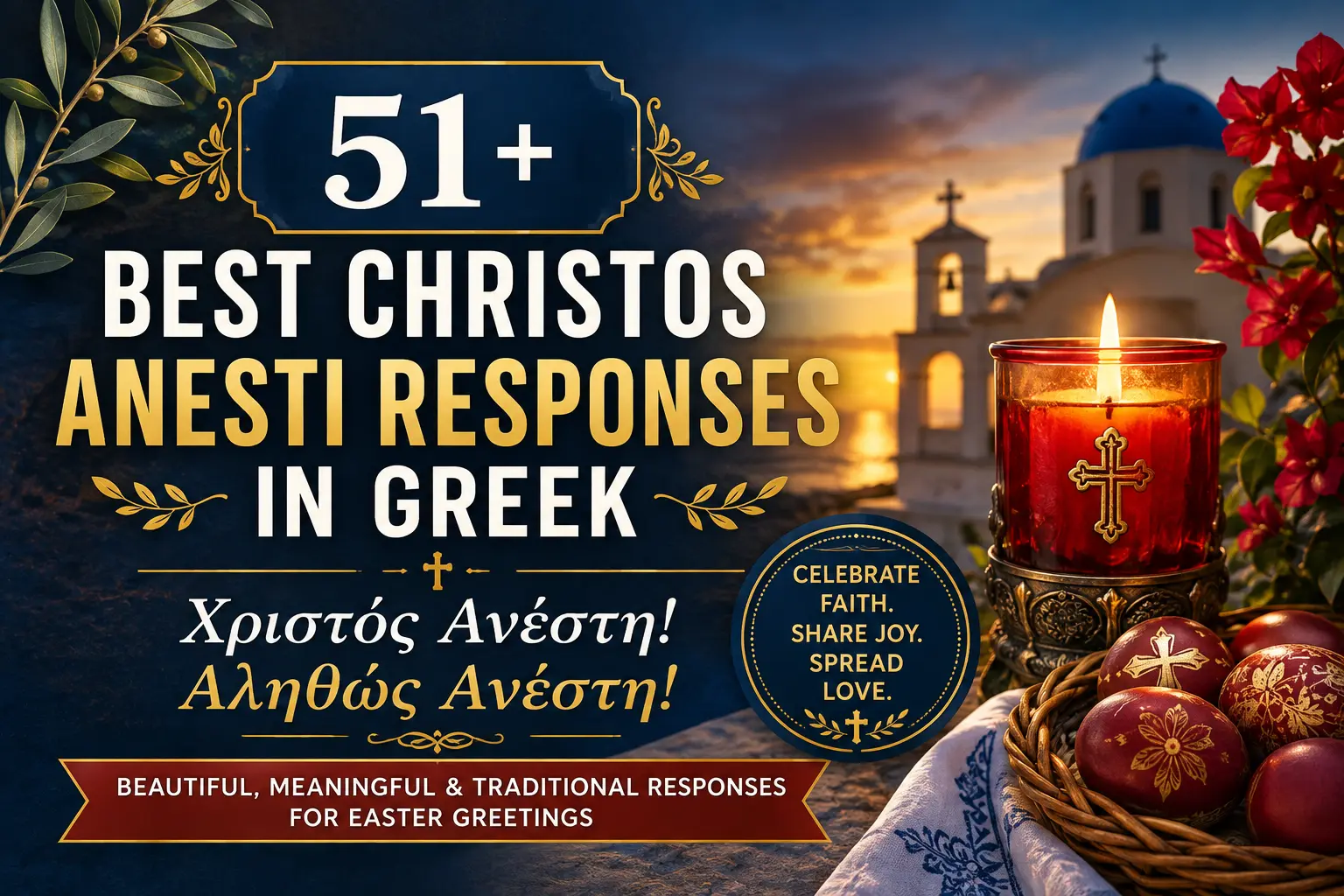
“Χριστός Ανέστη!” is one of the most joyful and meaningful greetings in Greek Orthodox Christian tradition. Heard especially during Easter, the phrase celebrates the Resurrection of Jesus Christ and carries a message of faith, hope, renewal, and joy. If someone wishes you “Χριστός Ανέστη!”, responding appropriately shows respect for the tradition and warmth toward the person sharing the greeting. The traditional response is “Αληθώς ο Κύριος!”, meaning “Truly, the Lord has risen.” However, there are many other heartfelt Greek expressions you can use depending on the relationship and situation. From traditional and religious responses to warm wishes for family, friends, and acquaintances, this guide explores more than 51 ways to respond naturally and respectfully. These alternatives can help make your Easter conversations more personal while honoring the cultural meaning behind this beautiful greeting.
What Does “Christos Anesti” Mean?
“Χριστός Ανέστη” (Christos Anesti) is Greek for “Christ is Risen.”
It is the traditional Easter greeting used by Greek Orthodox Christians, particularly during the Paschal season. The greeting refers to the Resurrection of Jesus Christ and expresses the central message of Easter.
The customary response is:
“Αληθώς ο Κύριος!”
This means “Truly, the Lord has risen!” or “Indeed, the Lord has risen!”
The exchange has a deeply religious and celebratory tone. It communicates faith, joy, hope, and spiritual renewal. While the traditional response remains the most appropriate in religious settings, people may also respond with additional Easter wishes and blessings.
When to Use “Christos Anesti” and Its Responses
“Χριστός Ανέστη!” is primarily used around Greek Orthodox Easter and the Paschal period.
During Easter Church Services
The phrase is commonly exchanged during Easter liturgies and celebrations.
“Χριστός Ανέστη!”
“Αληθώς ο Κύριος!”
This is the most traditional form of the exchange.
With Family
You can add a warm Easter wish when speaking with relatives.
“Χριστός Ανέστη! Να έχουμε υγεία και χαρά.”
This means, “Christ is Risen! May we have health and joy.”
With Friends
A friendly response can combine the traditional answer with personal wishes.
“Αληθώς ο Κύριος! Καλό Πάσχα σε σένα και την οικογένειά σου.”
In Text Messages
Short Greek responses are perfect for Easter messages and social media.
“Αληθώς ο Κύριος! Καλό Πάσχα!”
In Formal Messages
For elders, religious communities, or professional contacts, a respectful Easter blessing is appropriate.
“Αληθώς ο Κύριος. Εύχομαι υγεία, ειρήνη και κάθε ευλογία.”
In Speeches and Public Greetings
The phrase can be followed by a broader Easter message.
“Χριστός Ανέστη! Εύχομαι το Άγιο Φως της Ανάστασης να γεμίσει τις καρδιές όλων μας με ελπίδα και ειρήνη.”
Is “Christos Anesti” Polite or Professional?
Yes. “Χριστός Ανέστη!” is a respectful and culturally significant Easter greeting. The traditional response, “Αληθώς ο Κύριος!”, is equally respectful.
In professional settings, particularly when communicating with Greek Orthodox colleagues, clients, or business contacts during Easter, a simple traditional response is entirely appropriate.
However, the greeting is religious rather than business specific. Therefore, it is best used when the cultural or religious context is relevant. For a professional email, you can combine the traditional response with a courteous Easter wish.
For example:
“Αληθώς ο Κύριος! Σας εύχομαι Καλό Πάσχα, με υγεία, χαρά και κάθε ευλογία.”
This means, “Truly, the Lord has risen! I wish you a Happy Easter, with health, joy, and every blessing.”
1. Αληθώς ο Κύριος!
Meaning: Truly, the Lord has risen.
Tone: Traditional and reverent.
“Χριστός Ανέστη!” “Αληθώς ο Κύριος!”
Why to use it: This is the classic and most universally appropriate response to “Χριστός Ανέστη!”
Purpose and Personalization: Use it when you want to honor the traditional Greek Orthodox Easter exchange.
2. Αληθώς Ανέστη!
Meaning: Truly, He has risen.
Tone: Religious and traditional.
“Χριστός Ανέστη!” “Αληθώς Ανέστη!”
Why to use it: A concise response that keeps the focus on the Resurrection.
3. Αληθώς ο Κύριος Ανέστη!
Meaning: Truly, the Lord has risen.
Tone: Reverent and expressive.
“Αληθώς ο Κύριος Ανέστη!”
Why to use it: This gives the traditional response a slightly fuller and more emphatic form.
4. Καλό Πάσχα!
Meaning: Happy Easter.
Tone: Friendly and festive.
“Αληθώς ο Κύριος! Καλό Πάσχα σε όλους!”
Why to use it: Perfect for adding a warm seasonal wish after the traditional response.
5. Καλό και Ευλογημένο Πάσχα!
Meaning: Have a good and blessed Easter.
Tone: Warm and religious.
“Καλό και ευλογημένο Πάσχα σε εσένα και την οικογένειά σου.”
Why to use it: Ideal for family members, friends, and religious communities.
6. Χρόνια Πολλά!
Meaning: Many happy years or best wishes.
Tone: Traditional and celebratory.
“Αληθώς ο Κύριος! Χρόνια Πολλά με υγεία!”
Why to use it: A common Greek expression for festive occasions.
7. Χριστός Ανέστη, Αληθώς Ανέστη!
Meaning: Christ is Risen, Truly He is Risen.
Tone: Joyful and traditional.
“Χριστός Ανέστη, Αληθώς Ανέστη! Καλό Πάσχα!”
Why to use it: Works beautifully in Easter greetings and messages.
8. Καλό Πάσχα με Υγεία!
Meaning: Happy Easter with good health.
Tone: Warm and caring.
“Καλό Πάσχα με υγεία και χαρά σε όλη την οικογένεια.”
Why to use it: Particularly suitable for relatives and older family members.
9. Καλό και Ευλογημένο Πάσχα σε Όλους!
Meaning: A good and blessed Easter to everyone.
Tone: Inclusive and respectful.
“Χριστός Ανέστη! Καλό και ευλογημένο Πάσχα σε όλους!”
Why to use it: Excellent for group messages and social media posts.
10. Η Ανάσταση του Χριστού να Φέρει Χαρά!
Meaning: May Christ’s Resurrection bring joy.
Tone: Religious and heartfelt.
“Η Ανάσταση του Χριστού να φέρει χαρά και ελπίδα στην καρδιά σας.”
Why to use it: A meaningful response for religious conversations.
11. Είθε η Ανάσταση να Γεμίσει τις Καρδιές μας με Ελπίδα
Meaning: May the Resurrection fill our hearts with hope.
Tone: Inspirational and spiritual.
“Είθε η Ανάσταση να γεμίσει τις καρδιές μας με ελπίδα και αγάπη.”
Why to use it: Suitable for heartfelt Easter messages.
12. Με Υγεία, Αγάπη και Ειρήνη
Meaning: With health, love, and peace.
Tone: Warm and sincere.
“Αληθώς ο Κύριος! Με υγεία, αγάπη και ειρήνη σε όλους.”
Why to use it: A simple way to expand the traditional response into a blessing.
13. Καλό Πάσχα σε Εσένα και την Οικογένειά σου
Meaning: Happy Easter to you and your family.
Tone: Friendly and personal.
“Αληθώς ο Κύριος! Καλό Πάσχα σε εσένα και την οικογένειά σου.”
Why to use it: Perfect for personal Easter greetings.
14. Να Έχετε ένα Ευλογημένο Πάσχα
Meaning: May you have a blessed Easter.
Tone: Respectful and formal.
“Να έχετε ένα ευλογημένο Πάσχα γεμάτο υγεία και χαρά.”
Why to use it: Particularly appropriate for elders and formal contacts.
15. Η Ανάσταση να σας Χαρίζει Υγεία και Χαρά
Meaning: May the Resurrection grant you health and joy.
Tone: Heartfelt and respectful.
“Η Ανάσταση να σας χαρίζει υγεία, χαρά και γαλήνη.”
Why to use it: A beautiful choice for a sincere Easter message.
16. Εύχομαι Φως και Ελπίδα στη Ζωή σας
Meaning: I wish light and hope in your life.
Tone: Inspirational.
“Χριστός Ανέστη! Εύχομαι φως και ελπίδα στη ζωή σας.”
Why to use it: Ideal when you want your response to feel meaningful and uplifting.
17. Να Έχετε Αγάπη και Ειρήνη στις Καρδιές σας
Meaning: May you have love and peace in your hearts.
Tone: Spiritual and warm.
“Εύχομαι να έχετε αγάπη και ειρήνη στις καρδιές σας.”
Why to use it: Suitable for family and religious communities.
18. Με το Καλό η Ανάσταση!
Meaning: A warm wish associated with the Resurrection celebration.
Tone: Traditional and friendly.
“Με το καλό η Ανάσταση και Καλό Πάσχα σε όλους!”
Why to use it: Works well in informal Easter conversations.
19. Ας Γιορτάσουμε την Ανάσταση με Χαρά
Meaning: Let us celebrate the Resurrection with joy.
Tone: Joyful and communal.
“Ας γιορτάσουμε την Ανάσταση με χαρά, αγάπη και ευγνωμοσύνη.”
Why to use it: Excellent for group greetings.
20. Η Χαρά της Ανάστασης να Είναι Μαζί σας
Meaning: May the joy of the Resurrection be with you.
Tone: Religious and elegant.
“Η χαρά της Ανάστασης να είναι πάντα μαζί σας.”
Why to use it: A graceful alternative for heartfelt messages.
21. Το Άγιο Φως να Φωτίζει τον Δρόμο σας
Meaning: May the Holy Light illuminate your path.
Tone: Spiritual and poetic.
“Το Άγιο Φως να φωτίζει τον δρόμο σας και να σας χαρίζει ελπίδα.”
Why to use it: Ideal for meaningful Easter wishes.
22. Εύχομαι ένα Πάσχα Γεμάτο Αγάπη
Meaning: I wish you an Easter filled with love.
Tone: Warm and affectionate.
“Εύχομαι ένα Πάσχα γεμάτο αγάπη, χαμόγελα και όμορφες στιγμές.”
Why to use it: Great for friends and family.
23. Να Ζήσετε την Ανάσταση με Πίστη και Χαρά
Meaning: May you experience the Resurrection with faith and joy.
Tone: Spiritual and sincere.
“Να ζήσετε την Ανάσταση με πίστη, χαρά και ευγνωμοσύνη.”
Why to use it: Appropriate for religiously meaningful conversations.
24. Ειρηνικό και Ευλογημένο Πάσχα
Meaning: A peaceful and blessed Easter.
Tone: Formal and serene.
“Σας εύχομαι ένα ειρηνικό και ευλογημένο Πάσχα.”
Why to use it: Excellent for formal written greetings.
25. Με Χαρά και Ευλογία
Meaning: With joy and blessing.
Tone: Traditional and warm.
“Αληθώς ο Κύριος! Με χαρά και ευλογία σε κάθε σπίτι.”
Why to use it: A concise spiritual response.
26. Η Ανάσταση να Φέρει Νέα Αρχή
Meaning: May the Resurrection bring a new beginning.
Tone: Hopeful and inspirational.
“Η Ανάσταση να φέρει μια νέα αρχή γεμάτη ελπίδα.”
Why to use it: Beautiful when emphasizing renewal.
27. Να Έχετε Πάντα Ελπίδα στην Καρδιά σας
Meaning: May you always have hope in your heart.
Tone: Inspirational and heartfelt.
“Χριστός Ανέστη! Να έχετε πάντα ελπίδα στην καρδιά σας.”
Why to use it: A thoughtful response for someone going through change or difficulty.
28. Η Ανάσταση να Σκορπίσει Φως στη Ζωή σας
Meaning: May the Resurrection spread light into your life.
Tone: Poetic and spiritual.
“Εύχομαι η Ανάσταση να σκορπίσει φως στη ζωή σας.”
Why to use it: Suitable for elegant Easter cards and messages.
29. Χαρούμενη Ανάσταση!
Meaning: Joyful Resurrection.
Tone: Festive and warm.
“Χριστός Ανέστη! Χαρούμενη Ανάσταση σε εσάς και την οικογένειά σας.”
Why to use it: A cheerful Easter expression.
30. Ευλογημένη Ανάσταση!
Meaning: Blessed Resurrection.
Tone: Religious and respectful.
“Ευλογημένη Ανάσταση και Καλό Πάσχα!”
Why to use it: Particularly appropriate for religious settings.
31. Καλό Πάσχα με Αγάπη και Υγεία
Meaning: Happy Easter with love and health.
Tone: Warm and affectionate.
“Καλό Πάσχα με αγάπη, υγεία και πολλά χαμόγελα.”
Why to use it: Great for family and close friends.
32. Εύχομαι το Φως της Ανάστασης να σας Συνοδεύει
Meaning: May the light of the Resurrection accompany you.
Tone: Spiritual and elegant.
“Εύχομαι το φως της Ανάστασης να σας συνοδεύει όλο τον χρόνο.”
Why to use it: A sophisticated Easter blessing.
33. Ας Γεμίσει η Ανάσταση τις Καρδιές μας με Αγάπη
Meaning: May the Resurrection fill our hearts with love.
Tone: Heartfelt and communal.
“Ας γεμίσει η Ανάσταση τις καρδιές μας με αγάπη και ειρήνη.”
Why to use it: Suitable for group greetings and family messages.
34. Με Πίστη, Ελπίδα και Αγάπη
Meaning: With faith, hope, and love.
Tone: Spiritual and uplifting.
“Χριστός Ανέστη! Με πίστη, ελπίδα και αγάπη πάντα.”
Why to use it: A concise but meaningful response.
35. Να Έχετε ένα Φωτεινό Πάσχα
Meaning: May you have a bright Easter.
Tone: Warm and poetic.
“Να έχετε ένα φωτεινό Πάσχα γεμάτο όμορφες στιγμές.”
Why to use it: Perfect for a gentle and elegant Easter greeting.
36. Εύχομαι Κάθε Ευλογία στη Ζωή σας
Meaning: I wish you every blessing in your life.
Tone: Respectful and sincere.
“Αληθώς ο Κύριος! Εύχομαι κάθε ευλογία στη ζωή σας.”
Why to use it: Especially suitable for formal or religious communication.
37. Να Χαρείτε την Ανάσταση με τους Αγαπημένους σας
Meaning: May you enjoy the Resurrection with your loved ones.
Tone: Warm and personal.
“Να χαρείτε την Ανάσταση με τους ανθρώπους που αγαπάτε.”
Why to use it: Ideal for family and close friends.
38. Καλό Πάσχα και Καλή Ανάσταση
Meaning: Happy Easter and a good Resurrection celebration.
Tone: Traditional and friendly.
“Καλό Πάσχα και Καλή Ανάσταση σε όλη την οικογένεια!”
Why to use it: A familiar festive expression for Easter greetings.
39. Με Υγεία σε Κάθε Σπίτι
Meaning: Health to every household.
Tone: Traditional and caring.
“Χριστός Ανέστη! Με υγεία, χαρά και ειρήνη σε κάθε σπίτι.”
Why to use it: Wonderful for community or family messages.
40. Η Ανάσταση να Φέρει Ειρήνη
Meaning: May the Resurrection bring peace.
Tone: Spiritual and thoughtful.
“Εύχομαι η Ανάσταση να φέρει ειρήνη στις καρδιές όλων μας.”
Why to use it: A meaningful expression for formal Easter greetings.
41. Χριστός Ανέστη με Χαρά και Ευγνωμοσύνη
Meaning: Christ is Risen with joy and gratitude.
Tone: Reverent and uplifting.
“Χριστός Ανέστη με χαρά, πίστη και ευγνωμοσύνη!”
Why to use it: Suitable for reflective Easter messages.
42. Εύχομαι Άπειρες Ευλογίες
Meaning: I wish you countless blessings.
Tone: Warm and spiritual.
“Αληθώς ο Κύριος! Εύχομαι άπειρες ευλογίες σε εσάς και την οικογένειά σας.”
Why to use it: A beautiful option for close or religious contacts.
43. Να Έχετε Ένα Πάσχα Γεμάτο Φως
Meaning: May you have an Easter filled with light.
Tone: Poetic and warm.
“Να έχετε ένα Πάσχα γεμάτο φως, αγάπη και ελπίδα.”
Why to use it: Excellent for written Easter wishes.
44. Με το Καλό και του Χρόνου
Meaning: May we celebrate again next year.
Tone: Traditional and friendly.
“Χριστός Ανέστη! Με το καλό και του χρόνου!”
Why to use it: A natural Greek festive expression following an Easter celebration.
45. Και του Χρόνου με Υγεία
Meaning: May we celebrate again next year in good health.
Tone: Traditional and affectionate.
“Καλό Πάσχα και του χρόνου με υγεία!”
Why to use it: Commonly used when expressing hopes for future celebrations.
46. Να Είστε Πάντα Καλά
Meaning: May you always be well.
Tone: Friendly and caring.
“Αληθώς ο Κύριος! Να είστε πάντα καλά.”
Why to use it: A simple way to make the response more personal.
47. Να Χαίρεστε την Οικογένειά σας
Meaning: May you enjoy happiness with your family.
Tone: Warm and affectionate.
“Καλό Πάσχα και να χαίρεστε την οικογένειά σας.”
Why to use it: Particularly lovely when speaking to relatives or older people.
48. Με Αγάπη και Πολλές Ευχές
Meaning: With love and many good wishes.
Tone: Warm and personal.
“Χριστός Ανέστη! Με αγάπη και πολλές ευχές για ένα όμορφο Πάσχα.”
Why to use it: Great for personal cards and messages.
49. Εύχομαι Χαρά σε Κάθε Στιγμή
Meaning: I wish you joy in every moment.
Tone: Positive and heartfelt.
“Εύχομαι η χαρά της Ανάστασης να σας συνοδεύει κάθε στιγμή.”
Why to use it: A beautiful way to extend the Easter message beyond the holiday.
50. Ας Μας Ενώνει η Χαρά της Ανάστασης
Meaning: May the joy of the Resurrection unite us.
Tone: Communal and spiritual.
“Ας μας ενώνει η χαρά της Ανάστασης και η αγάπη για one another.”
Why to use it: Particularly effective for community gatherings and group messages.
51. Το Άγιο Φως να Γεμίζει τις Καρδιές σας
Meaning: May the Holy Light fill your hearts.
Tone: Spiritual and poetic.
“Το Άγιο Φως να γεμίζει τις καρδιές σας με ειρήνη και ελπίδα.”
Why to use it: A meaningful response for religious friends and family.
52. Εύχομαι Αγάπη, Ειρήνη και Ευλογία
Meaning: I wish you love, peace, and blessing.
Tone: Formal and heartfelt.
“Αληθώς ο Κύριος! Εύχομαι αγάπη, ειρήνη και ευλογία σε εσάς και τους αγαπημένους σας.”
Why to use it: Excellent for respectful Easter messages.
53. Να Έχετε ένα Πάσχα Αξέχαστο
Meaning: May you have an unforgettable Easter.
Tone: Friendly and celebratory.
“Να έχετε ένα Πάσχα αξέχαστο, γεμάτο χαρά και όμορφες αναμνήσεις.”
Why to use it: Ideal for friends and family.
54. Χρόνια Πολλά με Φως και Ελπίδα
Meaning: Many happy years with light and hope.
Tone: Warm and inspirational.
“Χρόνια Πολλά με φως, ελπίδα, υγεία και αγάπη.”
Why to use it: A lovely alternative when you want something more expressive.
55. Καλό Πάσχα και Κάθε Καλό
Meaning: Happy Easter and every good thing.
Tone: Friendly and sincere.
“Καλό Πάσχα και κάθε καλό σε εσένα και την οικογένειά σου.”
Why to use it: A versatile response that feels natural in everyday Greek communication.
Conclusion
Knowing how to respond to “Χριστός Ανέστη!” allows you to participate naturally and respectfully in an important Greek Easter tradition. The classic “Αληθώς ο Κύριος!” remains the most appropriate traditional response, but additional wishes can make your message warmer and more personal. Expressions involving health, peace, love, hope, blessings, and the Holy Light are excellent choices for family, friends, religious communities, and appropriate professional contacts. Whether you choose a short traditional reply or a heartfelt Easter blessing, let the context guide your words. A sincere response can preserve the cultural meaning of the greeting while making your communication more memorable.
Discover more