

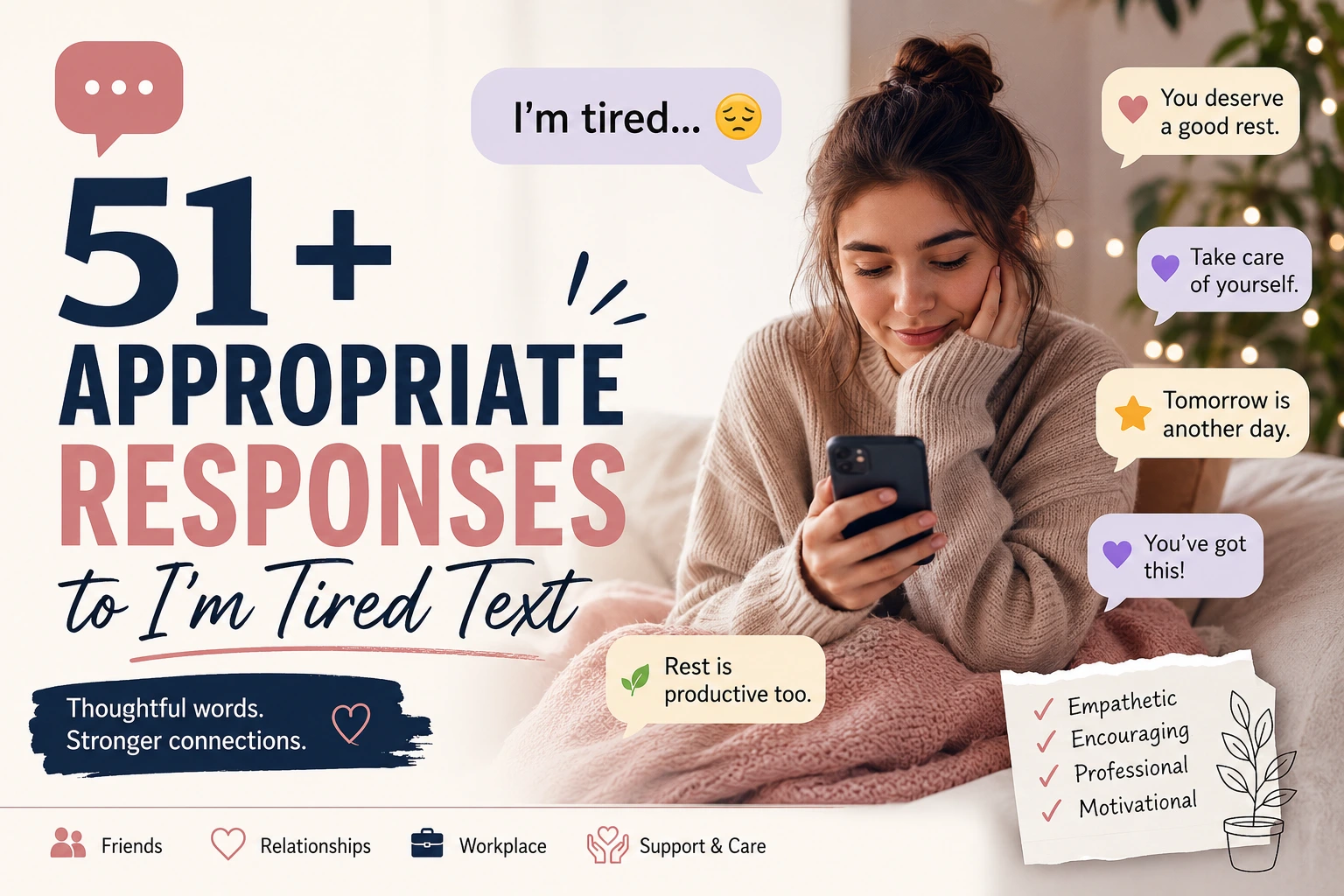
We’ve all received the simple message, “I’m tired,” at some point. While it may seem like a straightforward statement, it often carries deeper emotions. Someone could be physically exhausted after a long day, mentally drained from stress, or emotionally overwhelmed and looking for comfort. Your response can make a meaningful difference in how supported and understood they feel.
Choosing appropriate responses to “I’m tired” text helps you communicate with empathy instead of relying on repetitive replies. Whether you’re texting a friend, partner, coworker, or family member, thoughtful alternatives create stronger connections and show genuine care. In this guide, you’ll discover more than 51 creative, supportive, and natural responses suitable for different situations, helping every conversation feel warmer and more personal.
What Does Appropriate Responses to I’m Tired Text Mean?
Appropriate responses to “I’m tired” text refer to thoughtful, empathetic, and context-appropriate replies someone sends after receiving a message saying, “I’m tired.”
The phrase is commonly used when a person wants to express physical exhaustion, emotional fatigue, or mental burnout. Depending on the situation, they may simply want understanding, encouragement, practical advice, or someone who listens.
Responding with kindness rather than a generic answer helps the conversation feel more genuine and emotionally supportive.
When to Use It
You can use these responses in many everyday conversations where someone expresses feeling tired or worn out.
Casual Conversations
When chatting with friends, siblings, or family members.
Example:
“I’m tired.”
“Then you deserve a good break today.”
Romantic Conversations
When your partner needs emotional reassurance.
Example:
“I’m exhausted.”
“I wish I could help you relax right now.”
Workplace Messages
When a coworker mentions feeling drained after work.
Example:
“I’m really tired after today’s meetings.”
“You’ve worked hard. Hopefully you can get some rest tonight.”
Professional Emails
In professional communication, acknowledge their effort while remaining respectful.
Example:
“I understand it’s been a demanding week. Please take the time you need to recharge.”
Motivational Speeches or Supportive Messages
These responses also work in encouragement posts, wellness discussions, or motivational writing.
Example:
“Being tired doesn’t mean you’re weak. It means you’ve been giving your best.”
Is It Polite or Professional?
Yes. Appropriate responses to “I’m tired” can be both polite and professional when adjusted to the setting.
In casual conversations, warmer and more caring replies strengthen personal relationships. Friends and loved ones often appreciate emotional support or humor.
In professional environments, responses should remain respectful and encouraging without becoming overly personal. Acknowledging someone’s effort and wishing them rest demonstrates empathy while maintaining professionalism.
The best response depends on your relationship with the person and the context of the conversation.
1. You should get some rest.
Meaning: Encourages the person to recharge.
Tone: Caring
Example Sentence: “You’ve done enough today. You should get some rest.”
Explanation: A classic response that shows concern without sounding dramatic.
Purpose and Personalization: Perfect for anyone who seems physically exhausted.
2. I hope you can relax tonight.
Meaning: Wishes them a peaceful evening.
Tone: Warm
Example Sentence: “I hope you can relax tonight after everything.”
Explanation: Shows kindness and emotional support.
3. You deserve a break.
Meaning: Acknowledges their hard work.
Tone: Encouraging
Example Sentence: “You’ve been working nonstop. You deserve a break.”
Explanation: Makes the person feel appreciated.
4. Take care of yourself.
Meaning: Encourages self care.
Tone: Gentle
Example Sentence: “Please take care of yourself and don’t overdo it.”
Explanation: A thoughtful response suitable for anyone.
5. Get some sleep if you can.
Meaning: Suggests proper rest.
Tone: Friendly
Example Sentence: “Get some sleep if you can tonight.”
Explanation: Practical and supportive.
6. Tomorrow is another day.
Meaning: Offers hope after a difficult day.
Tone: Optimistic
Example Sentence: “Rest well. Tomorrow is another day.”
Explanation: Encourages a fresh start.
7. You’ve earned some downtime.
Meaning: Recognizes their effort.
Tone: Appreciative
Example Sentence: “You’ve earned some downtime after today.”
Explanation: Validates their hard work.
8. Don’t push yourself too hard.
Meaning: Advises moderation.
Tone: Caring
Example Sentence: “Don’t push yourself too hard. Your health matters.”
Explanation: Great for preventing burnout.
9. Take it easy today.
Meaning: Encourages slowing down.
Tone: Relaxed
Example Sentence: “Take it easy today if possible.”
Explanation: Suitable for casual chats.
10. You’ve been working really hard.
Meaning: Recognizes effort.
Tone: Appreciative
Example Sentence: “You’ve been working really hard lately.”
Explanation: Helps people feel seen.
11. I hope tomorrow feels easier.
Meaning: Expresses hope.
Tone: Encouraging
Example Sentence: “I hope tomorrow feels easier for you.”
Explanation: Comforting during stressful times.
12. Make sure you recharge.
Meaning: Encourages recovery.
Tone: Friendly
Example Sentence: “Make sure you recharge this evening.”
Explanation: Great for busy professionals.
13. I’m sorry you’re feeling worn out.
Meaning: Shows empathy.
Tone: Compassionate
Example Sentence: “I’m sorry you’re feeling worn out today.”
Explanation: Acknowledges their feelings.
14. You’ve got this.
Meaning: Offers encouragement.
Tone: Motivational
Example Sentence: “Rest first. You’ve got this.”
Explanation: Builds confidence.
15. Sending you positive thoughts.
Meaning: Offers emotional support.
Tone: Comforting
Example Sentence: “Sending you positive thoughts today.”
Explanation: Ideal for emotional exhaustion.
16. Be kind to yourself.
Meaning: Encourages self compassion.
Tone: Gentle
Example Sentence: “Be kind to yourself today.”
Explanation: Helpful during stressful periods.
17. Take a deep breath.
Meaning: Encourages relaxation.
Tone: Calm
Example Sentence: “Take a deep breath and slow down.”
Explanation: Useful when someone feels overwhelmed.
18. You don’t have to do everything today.
Meaning: Gives permission to pause.
Tone: Reassuring
Example Sentence: “You don’t have to do everything today.”
Explanation: Reduces unnecessary pressure.
19. Rest is productive too.
Meaning: Validates taking breaks.
Tone: Motivational
Example Sentence: “Remember, rest is productive too.”
Explanation: Helps reduce guilt.
20. Take one thing at a time.
Meaning: Encourages manageable progress.
Tone: Supportive
Example Sentence: “Take one thing at a time.”
Explanation: Helpful for mental fatigue.
21. I’m here if you want to talk.
Meaning: Offers emotional support.
Tone: Compassionate
Example Sentence: “I’m here if you want to talk about it.”
Explanation: Opens the door for conversation.
22. Hopefully you’ll feel better after some rest.
Meaning: Encourages recovery.
Tone: Caring
Example Sentence: “Hopefully you’ll feel better after some rest.”
Explanation: A reassuring reply.
23. Take care tonight.
Meaning: Wishes them well.
Tone: Warm
Example Sentence: “Take care tonight and sleep well.”
Explanation: A thoughtful closing message.
24. Listen to your body.
Meaning: Encourages healthy choices.
Tone: Supportive
Example Sentence: “Listen to your body and don’t ignore the signs.”
Explanation: Promotes wellness.
25. You’ve done enough for today.
Meaning: Reassures them they can stop.
Tone: Gentle
Example Sentence: “You’ve done enough for today. Rest now.”
Explanation: Helps relieve pressure.
26. I appreciate everything you’re doing.
Meaning: Shows gratitude.
Tone: Appreciative
Example Sentence: “I appreciate everything you’re doing.”
Explanation: Makes them feel valued.
27. Don’t forget to drink some water.
Meaning: Offers practical care.
Tone: Friendly
Example Sentence: “Don’t forget to drink some water too.”
Explanation: Small but thoughtful advice.
28. I hope you get a peaceful night.
Meaning: Wishes restful sleep.
Tone: Caring
Example Sentence: “I hope you get a peaceful night.”
Explanation: Warm and comforting.
29. Take all the time you need.
Meaning: Removes pressure.
Tone: Understanding
Example Sentence: “Take all the time you need to recover.”
Explanation: Great for supportive conversations.
30. You’ve been carrying a lot lately.
Meaning: Acknowledges emotional weight.
Tone: Empathetic
Example Sentence: “You’ve been carrying a lot lately.”
Explanation: Shows deep understanding.
31. Your well being comes first.
Meaning: Prioritizes health.
Tone: Supportive
Example Sentence: “Your well being comes first.”
Explanation: Encourages healthy boundaries.
32. Take a little break.
Meaning: Suggests resting.
Tone: Casual
Example Sentence: “Take a little break before continuing.”
Explanation: Great for everyday conversations.
33. Go easy on yourself.
Meaning: Encourages self kindness.
Tone: Warm
Example Sentence: “Go easy on yourself today.”
Explanation: Helps reduce self criticism.
34. You need a quiet evening.
Meaning: Suggests relaxation.
Tone: Caring
Example Sentence: “You need a quiet evening after today.”
Explanation: A comforting response.
35. Take things slowly.
Meaning: Encourages patience.
Tone: Gentle
Example Sentence: “Take things slowly and don’t rush.”
Explanation: Helpful for stressful situations.
36. Rest without feeling guilty.
Meaning: Gives permission to rest.
Tone: Encouraging
Example Sentence: “Rest without feeling guilty today.”
Explanation: Especially meaningful for hardworking people.
37. You matter too.
Meaning: Shows emotional support.
Tone: Compassionate
Example Sentence: “Don’t forget that you matter too.”
Explanation: A heartfelt reminder.
38. Take tonight off.
Meaning: Suggests taking a break.
Tone: Friendly
Example Sentence: “Take tonight off and relax.”
Explanation: Casual and supportive.
39. I hope things get lighter soon.
Meaning: Expresses hope.
Tone: Comforting
Example Sentence: “I hope things get lighter soon.”
Explanation: Suitable for emotional exhaustion.
40. You don’t always have to be strong.
Meaning: Validates vulnerability.
Tone: Emotional
Example Sentence: “You don’t always have to be strong.”
Explanation: Encourages openness.
41. I believe in you.
Meaning: Offers confidence.
Tone: Motivational
Example Sentence: “I believe in you, but get some rest first.”
Explanation: Inspires while showing care.
42. Thanks for pushing through today.
Meaning: Appreciates their effort.
Tone: Appreciative
Example Sentence: “Thanks for pushing through today.”
Explanation: Ideal for coworkers or teammates.
43. You’ve handled a lot today.
Meaning: Acknowledges challenges.
Tone: Supportive
Example Sentence: “You’ve handled a lot today.”
Explanation: Makes people feel understood.
44. I hope tomorrow brings more energy.
Meaning: Wishes improvement.
Tone: Optimistic
Example Sentence: “I hope tomorrow brings more energy.”
Explanation: Positive and uplifting.
45. Be patient with yourself.
Meaning: Encourages understanding.
Tone: Gentle
Example Sentence: “Be patient with yourself while you recover.”
Explanation: Helpful during difficult periods.
46. Take some time to unwind.
Meaning: Suggests relaxation.
Tone: Friendly
Example Sentence: “Take some time to unwind tonight.”
Explanation: Works in both personal and professional settings.
47. You deserve some peace and quiet.
Meaning: Wishes calmness.
Tone: Warm
Example Sentence: “You deserve some peace and quiet after today.”
Explanation: Ideal for stressful days.
48. Everything can wait until tomorrow.
Meaning: Encourages prioritizing rest.
Tone: Reassuring
Example Sentence: “Everything can wait until tomorrow.”
Explanation: Helps reduce pressure.
49. Thank you for giving your best today.
Meaning: Appreciates effort.
Tone: Appreciative
Example Sentence: “Thank you for giving your best today.”
Explanation: Great for workplace encouragement.
50. I hope you wake up refreshed.
Meaning: Wishes restorative sleep.
Tone: Caring
Example Sentence: “I hope you wake up refreshed tomorrow.”
Explanation: A positive way to end the conversation.
51. I’m rooting for you.
Meaning: Offers encouragement.
Tone: Motivational
Example Sentence: “Get some rest. I’m rooting for you.”
Explanation: Inspires confidence and support.
52. Take the evening to recharge your mind.
Meaning: Encourages mental recovery.
Tone: Encouraging
Example Sentence: “Take the evening to recharge your mind. Tomorrow will be a new beginning.”
Explanation: Ideal for someone who is mentally exhausted after a demanding day.
Purpose and Personalization: A thoughtful response for friends, coworkers, or loved ones experiencing burnout.
Conclusion
Responding thoughtfully when someone says, “I’m tired,” can transform a simple text into a meaningful interaction. Whether you choose a comforting, encouraging, or professional response, your words have the power to make someone feel heard and supported. These alternatives allow you to express empathy in a natural way while matching the tone of your relationship and the situation. Try mixing these responses into your daily conversations to create stronger, more genuine connections that leave a lasting positive impression.
Discover More:
how to respond to drive safely