

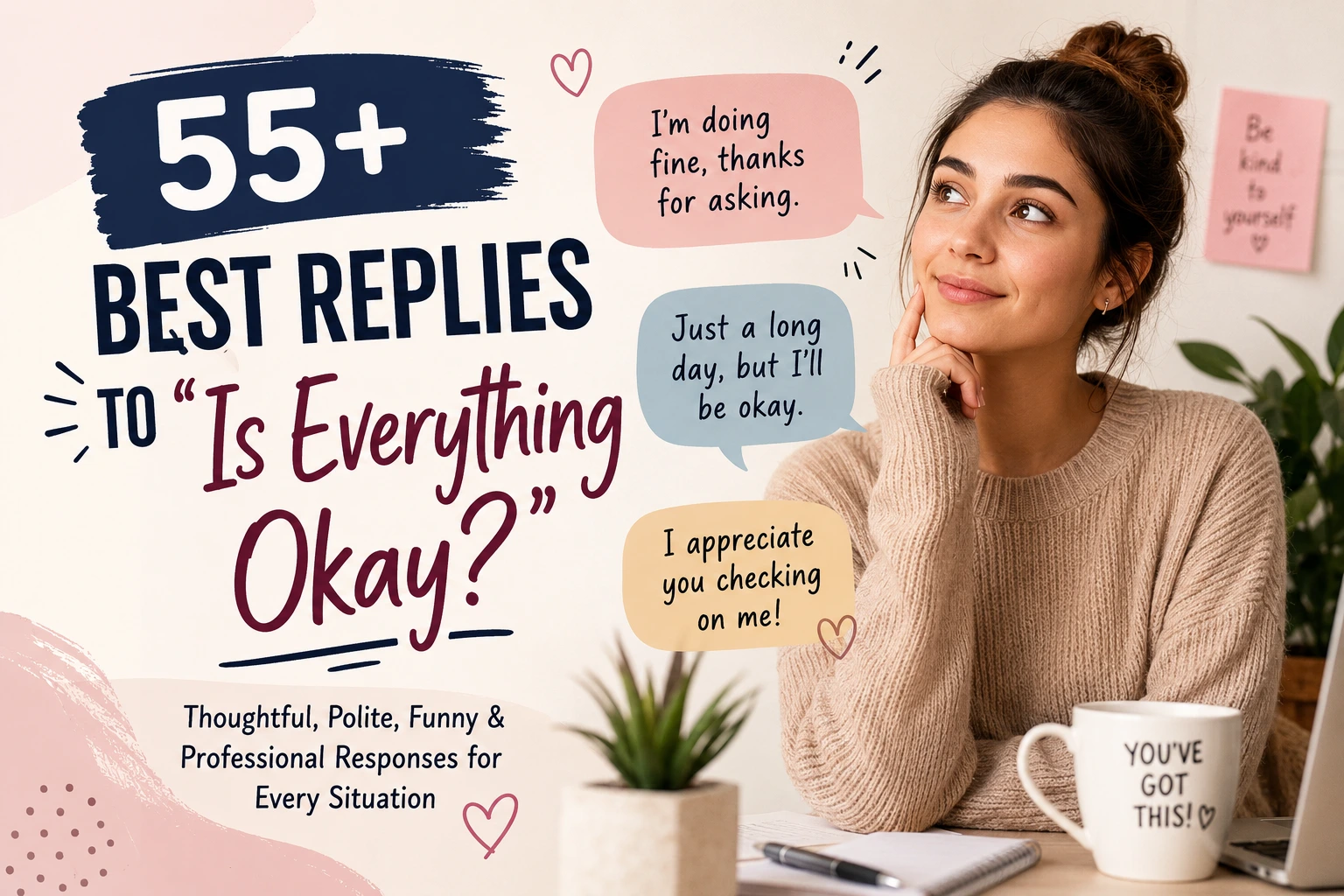
When someone asks, “Is everything okay?” they are often expressing genuine concern, checking on your well being, or trying to understand if something is bothering you. Your response can shape the conversation, strengthen relationships, and communicate your emotions more clearly. While a simple “I’m fine” may work in some situations, it does not always reflect how you truly feel or fit the tone of the moment. Learning different ways to reply allows you to respond with honesty, confidence, humor, professionalism, or gratitude depending on the situation. Whether you’re talking to a friend, coworker, family member, or manager, choosing the right response makes communication feel more natural and thoughtful. In this guide, you’ll discover over 55 of the best replies to “Is everything okay?” along with their meanings, tones, examples, and tips for using them effectively.
What Does “Best Replies to Is Everything Okay” Mean?
The phrase “best replies to is everything okay” refers to thoughtful, polite, honest, or creative responses you can give when someone asks if you’re doing alright.
People usually ask this question because they notice a change in your mood, behavior, or appearance. It often carries a caring, supportive, and empathetic tone. Your reply can reassure the other person, invite a deeper conversation, or politely let them know you’d rather keep things private.
When to Use It
You can use these replies in many everyday situations, including:
- Conversations with friends when they notice you’re quiet.
- Family discussions during emotional moments.
- Workplace conversations with coworkers or managers.
- Emails or messages when someone checks in on you.
- School or university interactions.
- Public speaking or interviews if asked about handling challenges.
Examples:
“Thanks for checking in. I’m doing okay.”
“I’ve had a busy week, but I’ll be fine.”
“I appreciate you asking. Everything is under control.”
Is It Polite or Professional?
Yes. Many replies to “Is everything okay?” are both polite and professional when matched to the situation.
In casual conversations, you can be warm, humorous, or honest. In professional settings, it’s usually best to remain respectful, brief, and positive while maintaining appropriate boundaries.
For example:
Professional: “Thank you for asking. I’m managing everything well.”
Friendly: “I’m okay, just having one of those days.”
The key is choosing a response that matches your relationship with the person and how much you’re comfortable sharing.
1. I’m doing fine. Thanks for asking.
Meaning: Everything is under control.
Tone: Friendly
Example: “I’m doing fine. Thanks for asking.”
Explanation: A classic and reassuring reply suitable almost anywhere.
Purpose and Personalization: Ideal when you appreciate the concern but don’t want a lengthy discussion.
2. I’m okay, just a little tired.
Meaning: You’re fine but feeling exhausted.
Tone: Honest
Example: “I’m okay, just a little tired after work.”
Explanation: A truthful yet simple response.
3. Everything’s alright now.
Meaning: Any previous issue has been resolved.
Tone: Positive
Example: “Everything’s alright now. Thanks for checking.”
Explanation: Offers reassurance.
4. I’m managing, thank you.
Meaning: Things aren’t perfect but you’re coping.
Tone: Professional
Example: “I’m managing, thank you for asking.”
Explanation: Great for workplace conversations.
5. I appreciate your concern.
Meaning: You’re grateful someone noticed.
Tone: Warm
Example: “I appreciate your concern. It means a lot.”
Explanation: Strengthens relationships.
6. I’m just having a long day.
Meaning: You’re temporarily stressed.
Tone: Casual
Example: “I’m just having a long day at the office.”
Explanation: Explains your mood without oversharing.
7. Nothing serious, don’t worry.
Meaning: The situation isn’t severe.
Tone: Reassuring
Example: “Nothing serious, don’t worry.”
Explanation: Helps ease the other person’s concerns.
8. Thanks for noticing.
Meaning: You appreciate their attention.
Tone: Friendly
Example: “Thanks for noticing. I’ve been a bit distracted.”
Explanation: Acknowledges their kindness.
9. I’m feeling better now.
Meaning: Your situation has improved.
Tone: Optimistic
Example: “I’m feeling better now.”
Explanation: Reassures the listener.
10. I’ll be okay.
Meaning: You’re confident things will improve.
Tone: Hopeful
Example: “I’ll be okay. Thank you.”
Explanation: Calm and encouraging.
11. Just dealing with a few things.
Meaning: You’re handling personal matters.
Tone: Honest
Example: “Just dealing with a few things right now.”
Explanation: Maintains privacy.
12. Everything’s under control.
Meaning: You have things handled.
Tone: Professional
Example: “Everything’s under control.”
Explanation: Suitable for work.
13. I’m hanging in there.
Meaning: You’re coping despite challenges.
Tone: Encouraging
Example: “I’m hanging in there.”
Explanation: Honest but optimistic.
14. I’ve been better.
Meaning: Things aren’t ideal.
Tone: Honest
Example: “I’ve been better lately.”
Explanation: Opens the door for conversation.
15. It’s been a busy week.
Meaning: Work or life has been hectic.
Tone: Casual
Example: “It’s been a busy week.”
Explanation: Common and relatable.
16. I’m just thinking about a lot.
Meaning: You’re deep in thought.
Tone: Reflective
Example: “I’m just thinking about a lot today.”
Explanation: Gentle explanation.
17. Everything will work out.
Meaning: You’re staying positive.
Tone: Motivational
Example: “Everything will work out eventually.”
Explanation: Encourages optimism.
18. I’m taking things one step at a time.
Meaning: You’re handling challenges gradually.
Tone: Positive
Example: “I’m taking things one step at a time.”
Explanation: Shows resilience.
19. I just needed a moment.
Meaning: You needed a short break.
Tone: Calm
Example: “I just needed a moment to breathe.”
Explanation: Useful after emotional situations.
20. I’m alright, honestly.
Meaning: You’re reassuring them.
Tone: Friendly
Example: “I’m alright, honestly.”
Explanation: Simple and sincere.
21. Thanks, I’m getting through it.
Meaning: You’re making progress.
Tone: Appreciative
Example: “Thanks, I’m getting through it.”
Explanation: Honest yet hopeful.
22. I’m keeping my head up.
Meaning: You’re staying positive.
Tone: Motivational
Example: “I’m keeping my head up.”
Explanation: Inspiring response.
23. I could use a little rest.
Meaning: You’re exhausted.
Tone: Casual
Example: “I could use a little rest.”
Explanation: Lighthearted honesty.
24. I’m feeling overwhelmed today.
Meaning: You have too much happening.
Tone: Honest
Example: “I’m feeling overwhelmed today.”
Explanation: Encourages understanding.
25. I appreciate you checking on me.
Meaning: You’re thankful.
Tone: Warm
Example: “I appreciate you checking on me.”
Explanation: Builds connection.
26. I’m okay now.
Meaning: Things have improved.
Tone: Reassuring
Example: “I’m okay now.”
Explanation: Short and comforting.
27. I’m taking care of it.
Meaning: You’re addressing the issue.
Tone: Confident
Example: “I’m taking care of it.”
Explanation: Shows responsibility.
28. It’s nothing you need to worry about.
Meaning: You don’t want them concerned.
Tone: Gentle
Example: “It’s nothing you need to worry about.”
Explanation: Politely reassures.
29. I just have a lot on my mind.
Meaning: You’re mentally occupied.
Tone: Honest
Example: “I just have a lot on my mind today.”
Explanation: Common and relatable.
30. I’m doing my best.
Meaning: You’re giving your full effort.
Tone: Encouraging
Example: “I’m doing my best.”
Explanation: Honest and motivating.
31. I’m feeling much better than before.
Meaning: Things have improved.
Tone: Optimistic
Example: “I’m feeling much better than before.”
Explanation: Positive update.
32. I’m getting there.
Meaning: Progress is being made.
Tone: Hopeful
Example: “I’m getting there slowly.”
Explanation: Shows improvement.
33. I’m keeping busy.
Meaning: You’re staying productive.
Tone: Casual
Example: “I’m keeping busy these days.”
Explanation: Redirects the conversation naturally.
34. I’m still figuring things out.
Meaning: You’re working through challenges.
Tone: Honest
Example: “I’m still figuring things out.”
Explanation: Authentic response.
35. Thank you for asking. It means a lot.
Meaning: You’re grateful.
Tone: Warm
Example: “Thank you for asking. It means a lot.”
Explanation: Deeply appreciative.
36. I’m taking it day by day.
Meaning: You’re focusing on the present.
Tone: Calm
Example: “I’m taking it day by day.”
Explanation: Encouraging and realistic.
37. I’m okay, just stressed.
Meaning: Stress is affecting you.
Tone: Honest
Example: “I’m okay, just stressed about work.”
Explanation: Clear and relatable.
38. Everything’s going to be fine.
Meaning: You’re optimistic.
Tone: Positive
Example: “Everything’s going to be fine.”
Explanation: Reassuring.
39. I’m keeping things in perspective.
Meaning: You’re staying balanced.
Tone: Reflective
Example: “I’m keeping things in perspective.”
Explanation: Mature response.
40. I’ve got this.
Meaning: You’re confident.
Tone: Confident
Example: “I’ve got this.”
Explanation: Motivating.
41. Just a little overwhelmed, but I’ll manage.
Meaning: You’re under pressure.
Tone: Honest
Example: “Just a little overwhelmed, but I’ll manage.”
Explanation: Balanced response.
42. I’m taking some time for myself.
Meaning: You’re practicing self care.
Tone: Calm
Example: “I’m taking some time for myself today.”
Explanation: Healthy boundary.
43. I’m grateful you asked.
Meaning: You appreciate their concern.
Tone: Warm
Example: “I’m grateful you asked.”
Explanation: Kind and sincere.
44. I’m working through it.
Meaning: You’re solving your problems.
Tone: Determined
Example: “I’m working through it one step at a time.”
Explanation: Positive mindset.
45. It’s just one of those days.
Meaning: Today has been difficult.
Tone: Casual
Example: “It’s just one of those days.”
Explanation: Common expression.
46. I’m staying positive.
Meaning: You’re focusing on optimism.
Tone: Motivational
Example: “I’m staying positive despite everything.”
Explanation: Inspiring.
47. I’m alright, thank you for caring.
Meaning: You appreciate their kindness.
Tone: Warm
Example: “I’m alright, thank you for caring.”
Explanation: Polite response.
48. I’m doing better than yesterday.
Meaning: Things are improving.
Tone: Hopeful
Example: “I’m doing better than yesterday.”
Explanation: Positive progress.
49. I’m taking a short break.
Meaning: You simply need some downtime.
Tone: Casual
Example: “I’m taking a short break to recharge.”
Explanation: Explains your mood.
50. Life has been a little hectic lately.
Meaning: You’ve been very busy.
Tone: Friendly
Example: “Life has been a little hectic lately.”
Explanation: Honest without oversharing.
51. I’m still smiling.
Meaning: You’re staying positive.
Tone: Cheerful
Example: “I’m still smiling despite the challenges.”
Explanation: Uplifting.
52. I’ll get through this.
Meaning: You’re determined.
Tone: Motivational
Example: “I’ll get through this.”
Explanation: Shows resilience.
53. I’m feeling a little off today.
Meaning: You’re not at your best.
Tone: Honest
Example: “I’m feeling a little off today.”
Explanation: Gentle explanation.
54. I’m doing the best I can.
Meaning: You’re trying your hardest.
Tone: Sincere
Example: “I’m doing the best I can right now.”
Explanation: Honest and relatable.
55. I’m thankful you’re here.
Meaning: Their support matters.
Tone: Emotional
Example: “I’m thankful you’re here.”
Explanation: Perfect for close relationships.
56. I’m alright, I just needed someone to ask.
Meaning: Their concern made you feel supported.
Tone: Heartfelt
Example: “I’m alright, I just needed someone to ask.”
Explanation: A meaningful response for trusted friends or family.
Conclusion
Having a variety of thoughtful replies to “Is everything okay?” helps you communicate with greater honesty, confidence, and emotional awareness. Some situations call for a simple reassurance, while others deserve a more open or appreciative response. By choosing words that match your feelings and the relationship you have with the other person, you create stronger connections and more meaningful conversations. Use these alternatives naturally, adapt them to your personality, and remember that the best response is one that feels genuine and appropriate for the moment.
Discover more:
funny roasts to say to a bully