
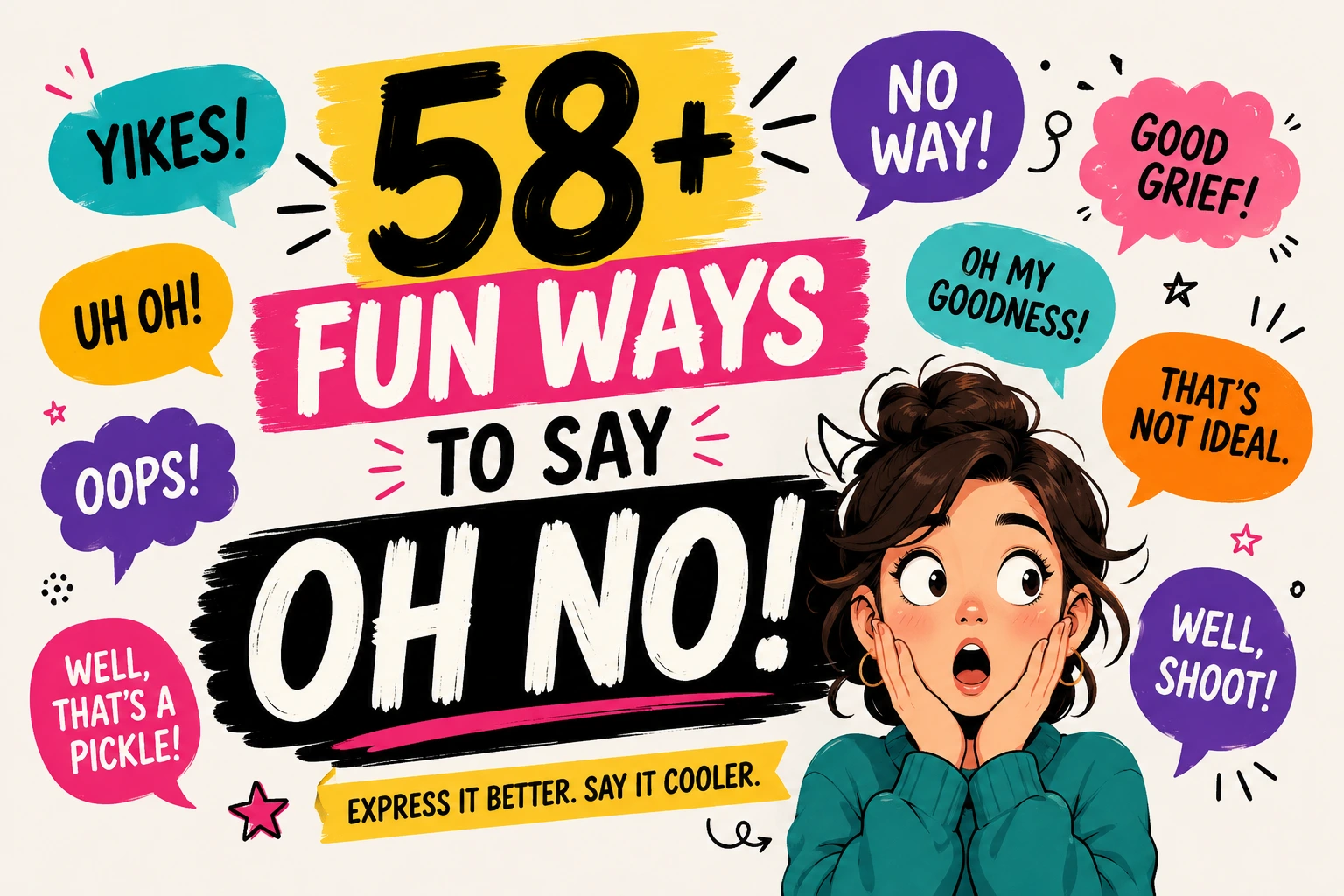
We all have moments when something unexpected goes wrong, plans fall apart, or we hear surprising news. The phrase “oh no” is one of the most common reactions in English, but using it repeatedly can become predictable. Whether you’re chatting with friends, writing a story, creating social media content, or simply trying to sound more expressive, having a variety of fun alternatives can make your conversations feel fresh and memorable.
Creative expressions add personality, humor, and emotion to your words. Some alternatives sound dramatic, while others are playful, sarcastic, or lighthearted. Choosing the right phrase helps you match the mood of the situation and connect more naturally with your audience. In this guide, you’ll discover over 58 fun ways to say “oh no” along with their meanings, tones, examples, and tips for using each one effectively.
What Does Fun Ways to Say Oh No Mean?
“Oh no” is an exclamation people use when reacting to bad news, disappointment, mistakes, accidents, or unexpected situations. It expresses emotions such as surprise, concern, frustration, disbelief, or sympathy.
Fun ways to say “oh no” are creative alternatives that communicate the same reaction while adding humor, personality, or dramatic flair. Depending on the phrase you choose, the tone can be playful, theatrical, sarcastic, or genuinely concerned.
When to Use It
You can replace “oh no” in many everyday situations, including casual conversations, text messages, storytelling, speeches, social media captions, and creative writing. Some alternatives even fit workplace conversations when kept light and appropriate.
Examples include:
- Casual conversation: “Yikes! I forgot my wallet.”
- Text message: “Well, that’s not ideal.”
- Storytelling: “Plot twist!”
- Workplace: “That’s unfortunate. Let’s figure out a solution.”
- Presentation: “Looks like we hit a small obstacle.”
Choosing the right alternative depends on your audience and the seriousness of the situation.
Is It Polite or Professional?
The phrase “oh no” itself is polite and suitable for everyday conversation. However, many humorous alternatives are best reserved for casual settings.
Professional environments call for expressions such as “That’s unfortunate,” “That’s unexpected,” or “Let’s solve this.” Friends, family, and social media audiences often appreciate more playful reactions like “Yikes!” or “Well, that’s a pickle.”
Understanding the setting helps you choose an expression that feels appropriate without sounding exaggerated.
1. Yikes!
Meaning: A reaction to something surprising or unpleasant.
Tone: Casual
Example Sentence: Yikes! I completely missed the deadline.
Short Explanation: Great for everyday conversations about small mishaps.
Purpose and Personalization: Keeps your reaction light without sounding overly dramatic.
2. Uh oh!
Meaning: Something may have gone wrong.
Tone: Friendly
Example Sentence: Uh oh! I think we took the wrong exit.
Short Explanation: Perfect for minor accidents or mistakes.
3. Whoops!
Meaning: Acknowledging a mistake.
Tone: Playful
Example Sentence: Whoops! I sent the email to the wrong person.
Short Explanation: Ideal for harmless errors.
4. Oops!
Meaning: Recognition of a small mistake.
Tone: Casual
Example Sentence: Oops! I spilled my coffee.
Short Explanation: One of the most common alternatives.
5. Oh dear!
Meaning: Expresses sympathy or concern.
Tone: Polite
Example Sentence: Oh dear! That must have been stressful.
Short Explanation: Suitable for polite conversations.
6. Good grief!
Meaning: Surprise mixed with frustration.
Tone: Humorous
Example Sentence: Good grief! Another meeting?
Short Explanation: Adds classic charm.
7. Well, that’s unfortunate.
Meaning: Acknowledging bad news.
Tone: Professional
Example Sentence: Well, that’s unfortunate. We’ll need another plan.
Short Explanation: Works well in formal settings.
8. That’s not ideal.
Meaning: Something isn’t going as planned.
Tone: Professional
Example Sentence: That’s not ideal. Let’s fix it.
Short Explanation: Calm and solution focused.
9. Oh boy…
Meaning: Expecting trouble.
Tone: Casual
Example Sentence: Oh boy… this won’t be easy.
Short Explanation: Shows mild concern.
10. Here we go again.
Meaning: The same problem has happened again.
Tone: Humorous
Example Sentence: Here we go again. The printer stopped working.
Short Explanation: Great for recurring issues.
11. Well, that’s a pickle.
Meaning: A tricky situation.
Tone: Playful
Example Sentence: Well, that’s a pickle. We forgot the tickets.
Short Explanation: Adds humor.
12. Oh, crumbs!
Meaning: Mild disappointment.
Tone: British and playful
Example Sentence: Oh, crumbs! I missed the bus.
Short Explanation: Family friendly expression.
13. Blast!
Meaning: Mild frustration.
Tone: Casual
Example Sentence: Blast! My phone battery died.
Short Explanation: Old fashioned but expressive.
14. Rats!
Meaning: Minor annoyance.
Tone: Friendly
Example Sentence: Rats! They’re sold out.
Short Explanation: Perfect for harmless disappointments.
15. Drat!
Meaning: Light frustration.
Tone: Classic
Example Sentence: Drat! I forgot my umbrella.
Short Explanation: Adds personality.
16. Well, that’s awkward.
Meaning: An embarrassing moment.
Tone: Casual
Example Sentence: Well, that’s awkward. We wore the same outfit.
Short Explanation: Great for social situations.
17. No way!
Meaning: Surprise or disbelief.
Tone: Friendly
Example Sentence: No way! That actually happened?
Short Explanation: Expresses shock.
18. Seriously?
Meaning: Disbelief.
Tone: Casual
Example Sentence: Seriously? Another delay?
Short Explanation: Common in conversations.
19. You’ve got to be kidding me!
Meaning: Strong disbelief.
Tone: Informal
Example Sentence: You’ve got to be kidding me!
Short Explanation: Best among friends.
20. Come on!
Meaning: Frustration.
Tone: Casual
Example Sentence: Come on! Not again.
Short Explanation: Shows impatience.
21. Plot twist!
Meaning: Unexpected change.
Tone: Funny
Example Sentence: Plot twist! The winner wasn’t who we expected.
Short Explanation: Great for storytelling.
22. Well, that’s a surprise.
Meaning: Unexpected news.
Tone: Neutral
Example Sentence: Well, that’s a surprise.
Short Explanation: Works in many settings.
23. That’s rough.
Meaning: Sympathy.
Tone: Friendly
Example Sentence: That’s rough. I hope things improve.
Short Explanation: Shows empathy.
24. Oh my goodness!
Meaning: Surprise.
Tone: Polite
Example Sentence: Oh my goodness! Look at that.
Short Explanation: Family friendly.
25. Mercy me!
Meaning: Amazement.
Tone: Traditional
Example Sentence: Mercy me! What happened here?
Short Explanation: Dramatic without being rude.
26. Dear me!
Meaning: Concern.
Tone: Polite
Example Sentence: Dear me! That’s unfortunate.
Short Explanation: Suitable for formal conversations.
27. Well then…
Meaning: Processing unexpected news.
Tone: Casual
Example Sentence: Well then… that changed everything.
Short Explanation: Adds humor.
28. This is not good.
Meaning: Concern.
Tone: Serious
Example Sentence: This is not good. We need help.
Short Explanation: Clear and direct.
29. Oh wow.
Meaning: Surprise.
Tone: Neutral
Example Sentence: Oh wow. I wasn’t expecting that.
Short Explanation: Works almost anywhere.
30. That figures.
Meaning: Something disappointing but expected.
Tone: Sarcastic
Example Sentence: That figures. It started raining.
Short Explanation: Great for irony.
31. Just my luck.
Meaning: Bad luck.
Tone: Humorous
Example Sentence: Just my luck. My tire went flat.
Short Explanation: Self deprecating humor.
32. Well, shoot!
Meaning: Mild frustration.
Tone: Friendly
Example Sentence: Well, shoot! I missed the train.
Short Explanation: Family friendly.
33. Holy moly!
Meaning: Big surprise.
Tone: Fun
Example Sentence: Holy moly! That’s huge.
Short Explanation: Expressive and energetic.
34. Oh snap!
Meaning: Unexpected event.
Tone: Slang
Example Sentence: Oh snap! That didn’t go well.
Short Explanation: Popular among younger speakers.
35. Well, darn.
Meaning: Mild disappointment.
Tone: Friendly
Example Sentence: Well, darn. It’s closed.
Short Explanation: Softens frustration.
36. That’s a shame.
Meaning: Sympathy.
Tone: Polite
Example Sentence: That’s a shame. Better luck next time.
Short Explanation: Professional and kind.
37. Oh, bother!
Meaning: Mild annoyance.
Tone: Classic
Example Sentence: Oh, bother! I forgot again.
Short Explanation: Gentle expression.
38. Not again!
Meaning: Repeated frustration.
Tone: Dramatic
Example Sentence: Not again!
Short Explanation: Perfect for recurring problems.
39. Oh heavens!
Meaning: Shock.
Tone: Traditional
Example Sentence: Oh heavens! That’s unexpected.
Short Explanation: Sounds elegant.
40. What a mess!
Meaning: Situation has become chaotic.
Tone: Casual
Example Sentence: What a mess!
Short Explanation: Describes disorder.
41. This can’t be happening.
Meaning: Disbelief.
Tone: Dramatic
Example Sentence: This can’t be happening.
Short Explanation: For major surprises.
42. Unbelievable!
Meaning: Shock.
Tone: Strong
Example Sentence: Unbelievable! We lost power again.
Short Explanation: Expresses strong emotion.
43. Oh my!
Meaning: Surprise.
Tone: Polite
Example Sentence: Oh my! That’s incredible.
Short Explanation: Timeless expression.
44. Oh dear me!
Meaning: Concern.
Tone: Warm
Example Sentence: Oh dear me! Are you okay?
Short Explanation: Shows care.
45. What now?
Meaning: Expecting another problem.
Tone: Casual
Example Sentence: What now?
Short Explanation: Works in humorous conversations.
46. Not ideal at all.
Meaning: Something went wrong.
Tone: Professional
Example Sentence: Not ideal at all. Let’s rethink our plan.
Short Explanation: Business friendly.
47. Oopsie!
Meaning: Tiny mistake.
Tone: Cute
Example Sentence: Oopsie! I clicked the wrong button.
Short Explanation: Best for informal chats.
48. Ay caramba!
Meaning: Surprise.
Tone: Humorous
Example Sentence: Ay caramba! I forgot my keys.
Short Explanation: Fun cultural expression.
49. Yowza!
Meaning: Astonishment.
Tone: Playful
Example Sentence: Yowza! That’s expensive.
Short Explanation: Adds excitement.
50. No kidding!
Meaning: Surprise.
Tone: Friendly
Example Sentence: No kidding! That’s unbelievable.
Short Explanation: Shows amazement.
51. Well, that’s unexpected.
Meaning: Surprise.
Tone: Professional
Example Sentence: Well, that’s unexpected.
Short Explanation: Suitable for work.
52. That’s unfortunate indeed.
Meaning: Sympathy.
Tone: Formal
Example Sentence: That’s unfortunate indeed.
Short Explanation: Respectful wording.
53. How unfortunate!
Meaning: Regret.
Tone: Formal
Example Sentence: How unfortunate!
Short Explanation: Elegant alternative.
54. Oh, come on!
Meaning: Frustration.
Tone: Informal
Example Sentence: Oh, come on! Really?
Short Explanation: Dramatic reaction.
55. What a disaster!
Meaning: Serious problem.
Tone: Dramatic
Example Sentence: What a disaster!
Short Explanation: Best for emphasis.
56. That’s a bummer.
Meaning: Disappointment.
Tone: Casual
Example Sentence: That’s a bummer. Maybe next time.
Short Explanation: Relaxed and friendly.
57. Talk about bad luck.
Meaning: Unfortunate event.
Tone: Conversational
Example Sentence: Talk about bad luck. We missed it by one minute.
Short Explanation: Great for storytelling.
58. Well, that didn’t go as planned.
Meaning: Something failed.
Tone: Professional
Example Sentence: Well, that didn’t go as planned, but we’ll adjust.
Short Explanation: Positive and solution focused.
59. Looks like we’ve hit a snag.
Meaning: A small obstacle appeared.
Tone: Professional
Example Sentence: Looks like we’ve hit a snag, but we’ll sort it out.
Short Explanation: Excellent for meetings and teamwork.
Conclusion
Expanding your vocabulary beyond the simple phrase “oh no” makes your conversations more expressive, engaging, and memorable. Whether you want to sound humorous, sympathetic, dramatic, or professional, there’s an alternative that perfectly matches the situation. By choosing expressions that fit your audience and tone, you’ll communicate more naturally and add personality to your everyday language. Try incorporating these alternatives into conversations, emails, stories, and social media posts to make your communication feel more lively and authentic
Discover More:
other ways to say your help is greatly appreciated
funny responses to i love you more
best replies to is everything okay