
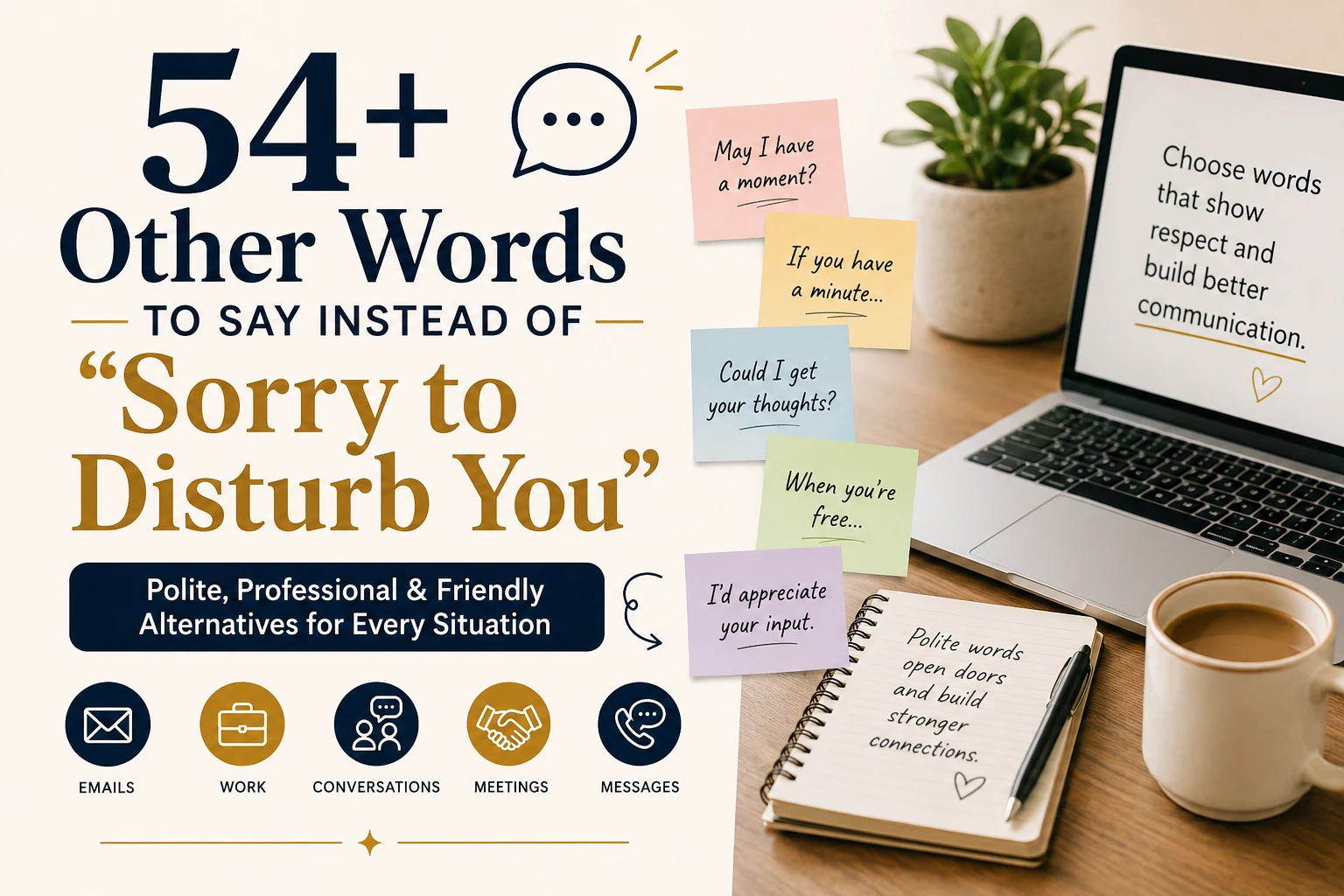
Whether you’re sending a quick email, starting a conversation, or asking for someone’s time, the phrase “sorry to disturb you” is one of the most commonly used expressions in English. While it is polite, repeating it too often can make your communication sound overly apologetic or less confident. Choosing fresh and thoughtful alternatives helps you sound more professional, approachable, and respectful without diminishing your message.
Using different expressions also allows you to match your tone to the situation. A formal workplace email may require a courteous opening, while a friendly text can feel more natural with a relaxed phrase. In this guide, you’ll discover over 54 other words to say instead of sorry to disturb you, along with their meanings, tones, examples, and practical tips for using them effectively.
What Does Other Words to Say Instead of Sorry to Disturb You Mean?
The phrase “sorry to disturb you” is used to politely acknowledge that you may be interrupting someone’s time, work, or attention. It expresses courtesy before making a request, asking a question, or starting a conversation.
The emotional tone is generally respectful, humble, and considerate. However, depending on the context, it can sometimes sound unnecessarily apologetic, especially in professional communication where confidence and clarity are valued.
Replacing it with alternative expressions lets you remain polite while sounding more natural and self assured.
When to Use It
You can use alternatives to sorry to disturb you in many everyday situations, including:
- Professional emails
- Business meetings
- Customer support conversations
- Classroom discussions
- Phone calls
- Text messages
- Networking conversations
- Presentations
- Social media messages
- Friendly chats
Examples include:
“I have a quick question if you have a moment.”
“When you have time, I’d appreciate your advice.”
“May I ask something?”
“Could I get your thoughts on this?”
These alternatives politely ask for attention without sounding overly apologetic.
Is It Polite or Professional?
Yes. Most alternatives to sorry to disturb you are both polite and professional when chosen appropriately.
In business settings, phrases that emphasize respect for someone’s time often sound stronger than repeated apologies. Instead of assuming you’re causing inconvenience, you acknowledge their availability while communicating confidently.
Casual settings allow warmer, friendlier expressions that feel conversational without sacrificing politeness.
The key is selecting an expression that matches the relationship and situation.
1. May I Have a Moment?
Meaning: Politely asks for someone’s time.
Tone: Formal
Example Sentence: May I have a moment to discuss today’s report?
Explanation: Ideal for meetings and professional conversations.
Purpose and Personalization: Shows respect while sounding confident.
2. When You Have a Minute
Meaning: Wait until they’re available.
Tone: Friendly Professional
Example Sentence: When you have a minute, I’d love your feedback.
Explanation: Removes urgency.
3. I Have a Quick Question
Meaning: Introduces a brief inquiry.
Tone: Casual Professional
Example Sentence: I have a quick question about tomorrow’s meeting.
Explanation: Sets expectations that it won’t take long.
4. Whenever You’re Free
Meaning: Lets them choose the timing.
Tone: Friendly
Example Sentence: Whenever you’re free, could we chat?
Explanation: Shows flexibility.
5. If You Have a Moment
Meaning: Requests attention politely.
Tone: Professional
Example Sentence: If you have a moment, I’d appreciate your opinion.
Explanation: Excellent for workplace emails.
6. Could I Ask You Something?
Meaning: Requests permission.
Tone: Friendly
Example Sentence: Could I ask you something about the project?
Explanation: Makes conversations feel natural.
7. Excuse Me for a Moment
Meaning: Politely gets attention.
Tone: Formal
Example Sentence: Excuse me for a moment. May I ask a question?
Explanation: Suitable for in person conversations.
8. I’d Appreciate Your Help
Meaning: Requests assistance.
Tone: Respectful
Example Sentence: I’d appreciate your help with this document.
Explanation: Focuses on gratitude.
9. May I Interrupt Briefly?
Meaning: Acknowledges an interruption.
Tone: Formal
Example Sentence: May I interrupt briefly with one question?
Explanation: Perfect during meetings.
10. Could You Spare a Minute?
Meaning: Requests a little time.
Tone: Friendly Professional
Example Sentence: Could you spare a minute to review this?
Explanation: Sounds courteous.
11. I Was Wondering If
Meaning: Softens a request.
Tone: Polite
Example Sentence: I was wondering if you could help me.
Explanation: Less direct but respectful.
12. If It’s Convenient
Meaning: Considers their schedule.
Tone: Professional
Example Sentence: If it’s convenient, could we speak today?
Explanation: Great for formal communication.
13. Whenever It Suits You
Meaning: Lets them choose.
Tone: Professional
Example Sentence: Whenever it suits you, let’s discuss this.
Explanation: Very considerate.
14. Could I Get Your Opinion?
Meaning: Invites feedback.
Tone: Respectful
Example Sentence: Could I get your opinion on this proposal?
Explanation: Encourages collaboration.
15. May I Ask a Favor?
Meaning: Introduces a request.
Tone: Warm
Example Sentence: May I ask a favor regarding the presentation?
Explanation: Appropriate for colleagues and friends.
16. I Hope I’m Catching You at a Good Time
Meaning: Acknowledges timing.
Tone: Professional
Example Sentence: I hope I’m catching you at a good time.
Explanation: Common in emails.
17. Would You Mind Helping Me?
Meaning: Polite request.
Tone: Friendly
Example Sentence: Would you mind helping me with this file?
Explanation: Sounds respectful.
18. Can I Run Something By You?
Meaning: Seeks input.
Tone: Casual Professional
Example Sentence: Can I run something by you quickly?
Explanation: Great among coworkers.
19. I’d Love Your Input
Meaning: Requests feedback.
Tone: Positive
Example Sentence: I’d love your input on this design.
Explanation: Makes others feel valued.
20. Could You Help Clarify Something?
Meaning: Asks for explanation.
Tone: Professional
Example Sentence: Could you help clarify this policy?
Explanation: Ideal for workplace discussions.
21. May I Speak With You?
Meaning: Requests conversation.
Tone: Formal
Example Sentence: May I speak with you after the meeting?
Explanation: Respectful and direct.
22. Would You Have Time?
Meaning: Checks availability.
Tone: Professional
Example Sentence: Would you have time to review this?
Explanation: Shows consideration.
23. If You’re Available
Meaning: Respects their schedule.
Tone: Neutral
Example Sentence: If you’re available, I’d appreciate your advice.
Explanation: Flexible wording.
24. Can We Chat Briefly?
Meaning: Requests a short discussion.
Tone: Friendly
Example Sentence: Can we chat briefly this afternoon?
Explanation: Casual yet polite.
25. Would This Be a Good Time?
Meaning: Confirms availability.
Tone: Professional
Example Sentence: Would this be a good time to discuss the report?
Explanation: Excellent for calls.
26. May I Have Your Attention?
Meaning: Requests focus.
Tone: Formal
Example Sentence: May I have your attention for a moment?
Explanation: Good for presentations.
27. Can I Ask for Your Advice?
Meaning: Seeks guidance.
Tone: Respectful
Example Sentence: Can I ask for your advice on this decision?
Explanation: Builds trust.
28. I Value Your Opinion
Meaning: Shows appreciation.
Tone: Warm
Example Sentence: I value your opinion on this matter.
Explanation: Makes requests more personal.
29. Could You Take a Look?
Meaning: Requests review.
Tone: Professional
Example Sentence: Could you take a look at this draft?
Explanation: Very common at work.
30. May I Get Your Thoughts?
Meaning: Invites feedback.
Tone: Professional
Example Sentence: May I get your thoughts on the proposal?
Explanation: Encourages collaboration.
31. I Need Your Expertise
Meaning: Acknowledges skill.
Tone: Respectful
Example Sentence: I need your expertise on this issue.
Explanation: Compliments the listener.
32. Would You Mind Taking a Look?
Meaning: Requests review.
Tone: Friendly
Example Sentence: Would you mind taking a look at this email?
Explanation: Soft and polite.
33. I’d Like Your Feedback
Meaning: Requests comments.
Tone: Professional
Example Sentence: I’d like your feedback before submitting this.
Explanation: Perfect for teamwork.
34. Could I Get Your Assistance?
Meaning: Requests help.
Tone: Formal
Example Sentence: Could I get your assistance with this task?
Explanation: Very professional.
35. May I Consult You?
Meaning: Requests expert advice.
Tone: Formal
Example Sentence: May I consult you regarding this project?
Explanation: Appropriate in business.
36. I Could Use Your Advice
Meaning: Seeks recommendations.
Tone: Friendly
Example Sentence: I could use your advice on this decision.
Explanation: Personal and warm.
37. Would You Be Available?
Meaning: Checks availability.
Tone: Professional
Example Sentence: Would you be available later today?
Explanation: Flexible wording.
38. May I Request Your Help?
Meaning: Polite assistance request.
Tone: Formal
Example Sentence: May I request your help with this report?
Explanation: Very respectful.
39. I’d Appreciate Your Guidance
Meaning: Requests mentoring.
Tone: Professional
Example Sentence: I’d appreciate your guidance on this assignment.
Explanation: Excellent for supervisors.
40. Can I Pick Your Brain?
Meaning: Seeks ideas.
Tone: Casual
Example Sentence: Can I pick your brain about marketing?
Explanation: Informal but popular.
41. May I Check Something With You?
Meaning: Confirms information.
Tone: Professional
Example Sentence: May I check something with you before submitting this?
Explanation: Useful in offices.
42. Could We Discuss Something?
Meaning: Starts conversation.
Tone: Neutral
Example Sentence: Could we discuss something after lunch?
Explanation: Simple and effective.
43. I’d Like to Ask Something
Meaning: Introduces question.
Tone: Friendly
Example Sentence: I’d like to ask something about the assignment.
Explanation: Everyday expression.
44. When You’re Ready
Meaning: Leaves timing open.
Tone: Friendly
Example Sentence: When you’re ready, I’d like to discuss an idea.
Explanation: Patient and respectful.
45. If You Don’t Mind
Meaning: Softens request.
Tone: Polite
Example Sentence: If you don’t mind, could you explain this?
Explanation: Widely accepted.
46. Could I Borrow a Minute?
Meaning: Requests brief time.
Tone: Friendly
Example Sentence: Could I borrow a minute to ask something?
Explanation: Warm expression.
47. Would You Be Willing to Help?
Meaning: Invites assistance.
Tone: Respectful
Example Sentence: Would you be willing to help with this project?
Explanation: Non demanding.
48. I’d Appreciate a Few Minutes
Meaning: Requests discussion.
Tone: Professional
Example Sentence: I’d appreciate a few minutes of your time.
Explanation: Suitable for meetings.
49. May I Reach Out?
Meaning: Politely initiates contact.
Tone: Professional
Example Sentence: May I reach out later today?
Explanation: Great for networking.
50. Can I Touch Base With You?
Meaning: Plans a brief conversation.
Tone: Business
Example Sentence: Can I touch base with you tomorrow?
Explanation: Common corporate phrase.
51. I Wanted to Check In
Meaning: Begins conversation politely.
Tone: Friendly
Example Sentence: I wanted to check in about the deadline.
Explanation: Natural and conversational.
52. May I Bring Something Up?
Meaning: Introduces topic.
Tone: Professional
Example Sentence: May I bring something up during the meeting?
Explanation: Respectful transition.
53. Could I Have Your Input?
Meaning: Requests contribution.
Tone: Professional
Example Sentence: Could I have your input before finalizing this?
Explanation: Collaborative wording.
54. I’d Like to Get Your Perspective
Meaning: Seeks another viewpoint.
Tone: Professional
Example Sentence: I’d like to get your perspective on this proposal.
Explanation: Encourages thoughtful discussion.
55. Whenever You Get a Chance
Meaning: No immediate urgency.
Tone: Friendly Professional
Example Sentence: Whenever you get a chance, could you review my draft?
Explanation: Perfect when the request is not time sensitive.
Conclusion
Using alternatives to sorry to disturb you helps you communicate with greater confidence while remaining polite and considerate. Whether you’re writing a formal email, messaging a colleague, or speaking with a friend, choosing the right expression creates a more natural and engaging conversation. These alternatives allow you to respect someone’s time without sounding overly apologetic. Try using different phrases based on your audience and situation, and you’ll develop a communication style that feels both professional and authentic.
Discover More: