

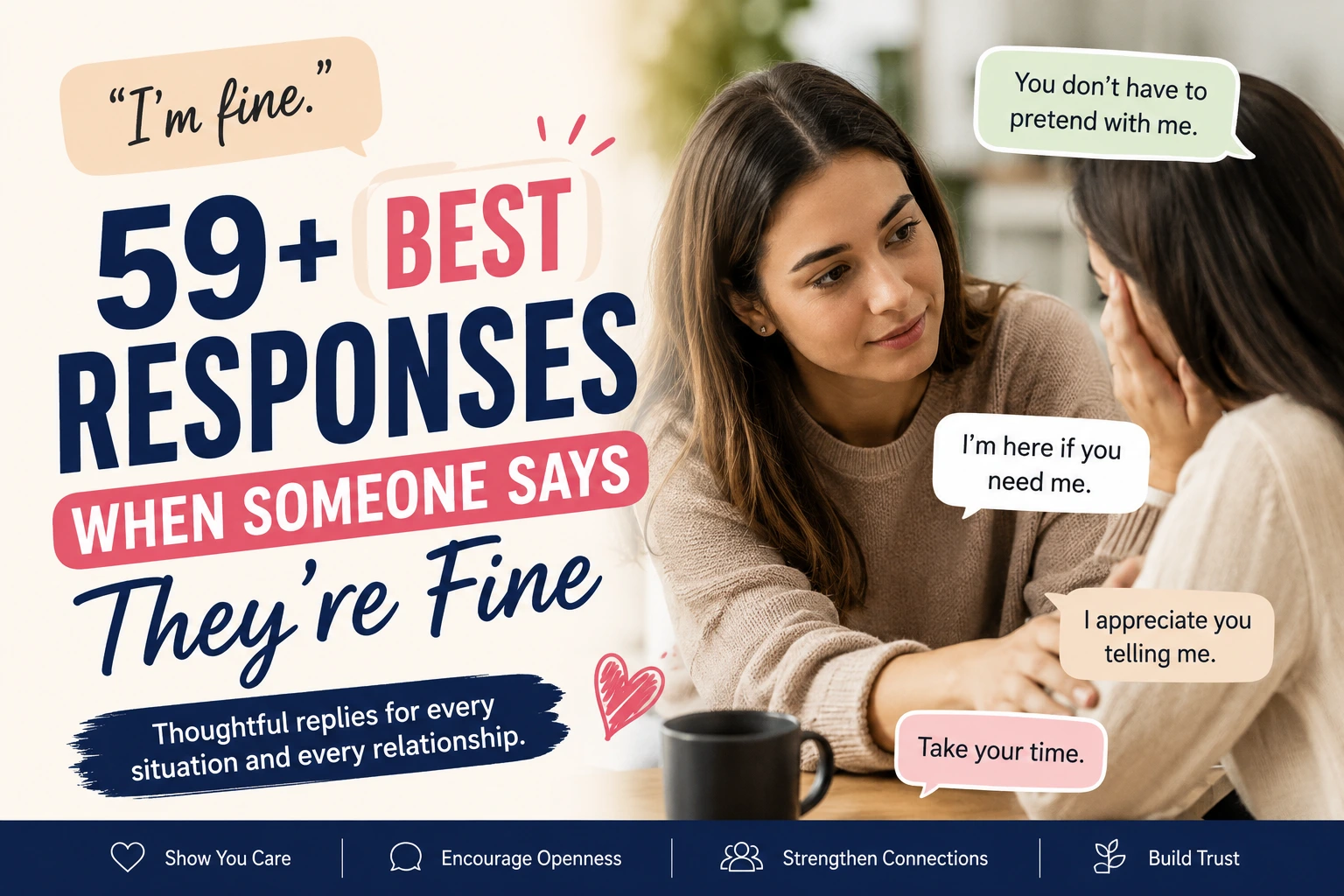
When someone says, “I’m fine,” those two simple words can mean many different things. Sometimes they genuinely feel okay, but other times they may be hiding stress, sadness, frustration, or discomfort. Responding thoughtfully instead of ending the conversation can show empathy, strengthen relationships, and encourage honest communication.
Knowing the best responses when someone says they’re fine helps you connect on a deeper level without sounding intrusive. Whether you’re talking to a friend, coworker, family member, or partner, choosing the right words can make someone feel heard and supported. Instead of repeating the same response every time, using creative and meaningful alternatives allows your conversations to feel more genuine, compassionate, and personal. The phrases below will help you navigate both casual and professional situations with confidence.
What Does “Best Responses When Someone Says They’re Fine” Mean?
The phrase refers to thoughtful replies you can use after someone tells you they’re “fine.” Rather than accepting the answer immediately, these responses gently encourage honesty, show concern, or simply acknowledge their feelings.
The emotional tone depends on the situation. Sometimes a lighthearted reply keeps the conversation friendly, while other situations call for empathy, reassurance, or patience. The goal is to communicate that you’re willing to listen without making the other person feel pressured.
When to Use It
These responses work in many everyday situations, including personal conversations, workplaces, schools, emails, and even professional meetings when someone appears stressed.
Common situations include:
- A friend insists they’re okay after a difficult day.
- A coworker says they’re fine despite looking overwhelmed.
- A family member avoids discussing their feelings.
- A partner gives a short response after an argument.
- A classmate seems upset but doesn’t want to talk.
Examples:
“I’m fine.”
“You don’t have to explain unless you want to.”
“I’m fine.”
“I’m here if you ever want to talk.”
“I’m fine.”
“I appreciate you letting me know.”
Is It Polite or Professional?
Yes. Many of these responses are polite, respectful, and appropriate in both personal and professional settings. The key is matching your tone to your relationship with the person.
Formal responses are ideal for workplaces, clients, teachers, or professional emails where maintaining boundaries is important.
Friendly and supportive responses work best with close friends, family members, or partners who may appreciate emotional reassurance.
Avoid sounding overly pushy. Giving people space while letting them know you’re available often creates the most meaningful conversations.
1. I’m here if you need me.
Meaning: Offers support without pressure.
Tone: Caring
Example Sentence: I’m here if you need me, anytime.
Explanation: Reassures them you’re available whenever they’re ready.
Purpose and Personalization: Ideal for friends and family.
2. Are you sure everything’s okay?
Meaning: Gently checks in.
Tone: Concerned
Example Sentence: Are you sure everything’s okay? You seem a little different today.
Explanation: Encourages honesty without sounding demanding.
3. You don’t have to pretend with me.
Meaning: Invites openness.
Tone: Compassionate
Example Sentence: You don’t have to pretend with me.
Explanation: Builds trust during emotional conversations.
4. Take your time.
Meaning: Gives them space.
Tone: Patient
Example Sentence: Take your time. There’s no rush.
Explanation: Removes pressure from the conversation.
5. I’m listening whenever you’re ready.
Meaning: Shows willingness to hear them.
Tone: Supportive
Example Sentence: I’m listening whenever you’re ready.
Explanation: Lets them open up at their own pace.
6. I appreciate you telling me.
Meaning: Acknowledges their response.
Tone: Respectful
Example Sentence: I appreciate you telling me.
Explanation: Keeps the conversation positive.
7. If you change your mind, let me know.
Meaning: Leaves the door open.
Tone: Friendly
Example Sentence: If you change your mind, I’m here.
Explanation: Encourages future conversations.
8. I hope things get easier soon.
Meaning: Offers encouragement.
Tone: Warm
Example Sentence: I hope things get easier soon.
Explanation: Appropriate when they seem stressed.
9. I’m glad you’re okay.
Meaning: Accepts their answer kindly.
Tone: Positive
Example Sentence: I’m glad you’re okay.
Explanation: Good when they genuinely seem fine.
10. You seem a little quiet today.
Meaning: Observes without judging.
Tone: Gentle
Example Sentence: You seem a little quiet today. Everything alright?
Explanation: Starts a natural conversation.
11. I’m only asking because I care.
Meaning: Explains your concern.
Tone: Caring
Example Sentence: I’m only asking because I care.
Explanation: Prevents your question from feeling intrusive.
12. No pressure at all.
Meaning: Respects boundaries.
Tone: Calm
Example Sentence: No pressure at all if you don’t want to talk.
Explanation: Helps them feel comfortable.
13. Would talking help?
Meaning: Offers conversation.
Tone: Thoughtful
Example Sentence: Would talking help?
Explanation: Gives them an easy opportunity to open up.
14. I’m always in your corner.
Meaning: Expresses loyalty.
Tone: Encouraging
Example Sentence: Remember, I’m always in your corner.
Explanation: Great for close relationships.
15. Thanks for being honest.
Meaning: Appreciates their response.
Tone: Respectful
Example Sentence: Thanks for being honest with me.
Explanation: Reinforces trust.
16. I’ll respect that.
Meaning: Accepts their answer.
Tone: Professional
Example Sentence: I’ll respect that, but let me know if anything changes.
Explanation: Perfect in workplace settings.
17. Just checking in.
Meaning: Shows care.
Tone: Casual
Example Sentence: Just checking in because you seemed stressed.
Explanation: Keeps things relaxed.
18. You matter to me.
Meaning: Expresses appreciation.
Tone: Heartfelt
Example Sentence: You matter to me, that’s why I asked.
Explanation: Strengthens relationships.
19. Take care of yourself.
Meaning: Encourages self care.
Tone: Warm
Example Sentence: Take care of yourself today.
Explanation: Works well at the end of conversations.
20. I’m rooting for you.
Meaning: Offers encouragement.
Tone: Motivational
Example Sentence: Whatever’s happening, I’m rooting for you.
Explanation: Inspires confidence.
21. It’s okay not to be okay.
Meaning: Normalizes emotions.
Tone: Compassionate
Example Sentence: It’s okay not to be okay.
Explanation: Helps reduce emotional pressure.
22. I understand.
Meaning: Shows acceptance.
Tone: Calm
Example Sentence: I understand.
Explanation: Short but reassuring.
23. I’m glad we talked.
Meaning: Appreciates the conversation.
Tone: Friendly
Example Sentence: I’m glad we talked today.
Explanation: Ends conversations positively.
24. You’re not alone.
Meaning: Offers companionship.
Tone: Supportive
Example Sentence: You’re not alone in this.
Explanation: Comforts someone during hard times.
25. I’m thinking about you.
Meaning: Shows ongoing care.
Tone: Warm
Example Sentence: Just wanted you to know I’m thinking about you.
Explanation: Great follow up message.
26. I’m only a message away.
Meaning: Makes yourself available.
Tone: Friendly
Example Sentence: I’m only a message away.
Explanation: Perfect for texting.
27. Would you like some company?
Meaning: Offers presence.
Tone: Caring
Example Sentence: Would you like some company later?
Explanation: Helpful when someone seems lonely.
28. I’m here to listen.
Meaning: Offers a listening ear.
Tone: Compassionate
Example Sentence: I’m here to listen whenever you’re ready.
Explanation: Encourages conversation.
29. I believe you.
Meaning: Accepts what they say.
Tone: Respectful
Example Sentence: I believe you, and I also care about how you’re feeling.
Explanation: Avoids dismissing their words.
30. Thanks for letting me know.
Meaning: Acknowledges their answer.
Tone: Professional
Example Sentence: Thanks for letting me know.
Explanation: Suitable in workplace conversations.
31. How can I help?
Meaning: Offers assistance.
Tone: Helpful
Example Sentence: How can I help if you need anything?
Explanation: Focuses on solutions.
32. I’m here without judgment.
Meaning: Creates a safe space.
Tone: Compassionate
Example Sentence: I’m here without judgment.
Explanation: Encourages honesty.
33. Take all the time you need.
Meaning: Gives emotional space.
Tone: Patient
Example Sentence: Take all the time you need.
Explanation: Reduces pressure.
34. You can always count on me.
Meaning: Expresses reliability.
Tone: Loyal
Example Sentence: You can always count on me.
Explanation: Builds trust.
35. I noticed something seemed off.
Meaning: Shares an observation.
Tone: Gentle
Example Sentence: I noticed something seemed off today.
Explanation: Opens dialogue naturally.
36. I’m glad you told me.
Meaning: Appreciates communication.
Tone: Warm
Example Sentence: I’m glad you told me.
Explanation: Makes them feel valued.
37. Whatever you need.
Meaning: Offers flexible support.
Tone: Caring
Example Sentence: Whatever you need, let me know.
Explanation: Shows commitment.
38. You don’t have to handle everything alone.
Meaning: Encourages seeking support.
Tone: Encouraging
Example Sentence: You don’t have to handle everything alone.
Explanation: Helpful during stressful times.
39. Let’s take it one step at a time.
Meaning: Promotes calm.
Tone: Reassuring
Example Sentence: Let’s take it one step at a time.
Explanation: Reduces overwhelm.
40. I’m happy to help if I can.
Meaning: Offers practical assistance.
Tone: Friendly
Example Sentence: I’m happy to help if I can.
Explanation: Suitable anywhere.
41. I’ll check in later.
Meaning: Promises follow up.
Tone: Thoughtful
Example Sentence: I’ll check in later if that’s okay.
Explanation: Shows continued care.
42. Sending you good thoughts.
Meaning: Offers encouragement.
Tone: Warm
Example Sentence: Sending you good thoughts today.
Explanation: Great in messages.
43. Take it easy today.
Meaning: Encourages rest.
Tone: Casual
Example Sentence: Take it easy today.
Explanation: Friendly and supportive.
44. Be kind to yourself.
Meaning: Encourages self compassion.
Tone: Gentle
Example Sentence: Be kind to yourself.
Explanation: Helpful during difficult moments.
45. You deserve support.
Meaning: Reinforces their value.
Tone: Encouraging
Example Sentence: You deserve support just like everyone else.
Explanation: Boosts confidence.
46. Thank you for sharing.
Meaning: Shows appreciation.
Tone: Professional
Example Sentence: Thank you for sharing that with me.
Explanation: Appropriate in many settings.
47. I care about how you’re doing.
Meaning: Expresses concern.
Tone: Warm
Example Sentence: I care about how you’re doing.
Explanation: Makes your intentions clear.
48. I’m glad you’re talking to me.
Meaning: Appreciates communication.
Tone: Friendly
Example Sentence: I’m glad you’re talking to me.
Explanation: Encourages openness.
49. Please reach out anytime.
Meaning: Offers future support.
Tone: Professional
Example Sentence: Please reach out anytime.
Explanation: Excellent in emails.
50. You’re stronger than you think.
Meaning: Motivates someone.
Tone: Inspirational
Example Sentence: You’re stronger than you think.
Explanation: Builds confidence.
51. I appreciate your honesty.
Meaning: Recognizes sincerity.
Tone: Respectful
Example Sentence: I appreciate your honesty.
Explanation: Strengthens trust.
52. I’m with you.
Meaning: Shows solidarity.
Tone: Supportive
Example Sentence: Whatever happens, I’m with you.
Explanation: Short but meaningful.
53. Let’s figure it out together.
Meaning: Offers teamwork.
Tone: Encouraging
Example Sentence: Let’s figure it out together.
Explanation: Reduces feelings of isolation.
54. You don’t have to explain anything.
Meaning: Respects privacy.
Tone: Gentle
Example Sentence: You don’t have to explain anything.
Explanation: Gives them control.
55. I hope tomorrow feels better.
Meaning: Offers hope.
Tone: Optimistic
Example Sentence: I hope tomorrow feels better.
Explanation: Encourages positivity.
56. I’m always happy to listen.
Meaning: Keeps communication open.
Tone: Friendly
Example Sentence: I’m always happy to listen.
Explanation: Works for ongoing friendships.
57. You can be honest with me.
Meaning: Invites openness.
Tone: Compassionate
Example Sentence: You can be honest with me if you want.
Explanation: Builds emotional safety.
58. I hope you’re taking care of yourself.
Meaning: Shows concern.
Tone: Caring
Example Sentence: I hope you’re taking care of yourself.
Explanation: Gentle and thoughtful.
59. We’ll get through this.
Meaning: Offers reassurance.
Tone: Encouraging
Example Sentence: We’ll get through this together.
Explanation: Inspires hope and partnership.
Conclusion
The best responses when someone says they’re fine go beyond simple conversation. They communicate empathy, patience, and genuine concern while respecting the other person’s boundaries. Whether you’re speaking with a close friend, family member, colleague, or acquaintance, choosing thoughtful alternatives can strengthen trust and encourage more meaningful communication. Try different responses based on the situation, and remember that sometimes the kindest thing you can offer is your willingness to listen without judgment.
Discover More: